
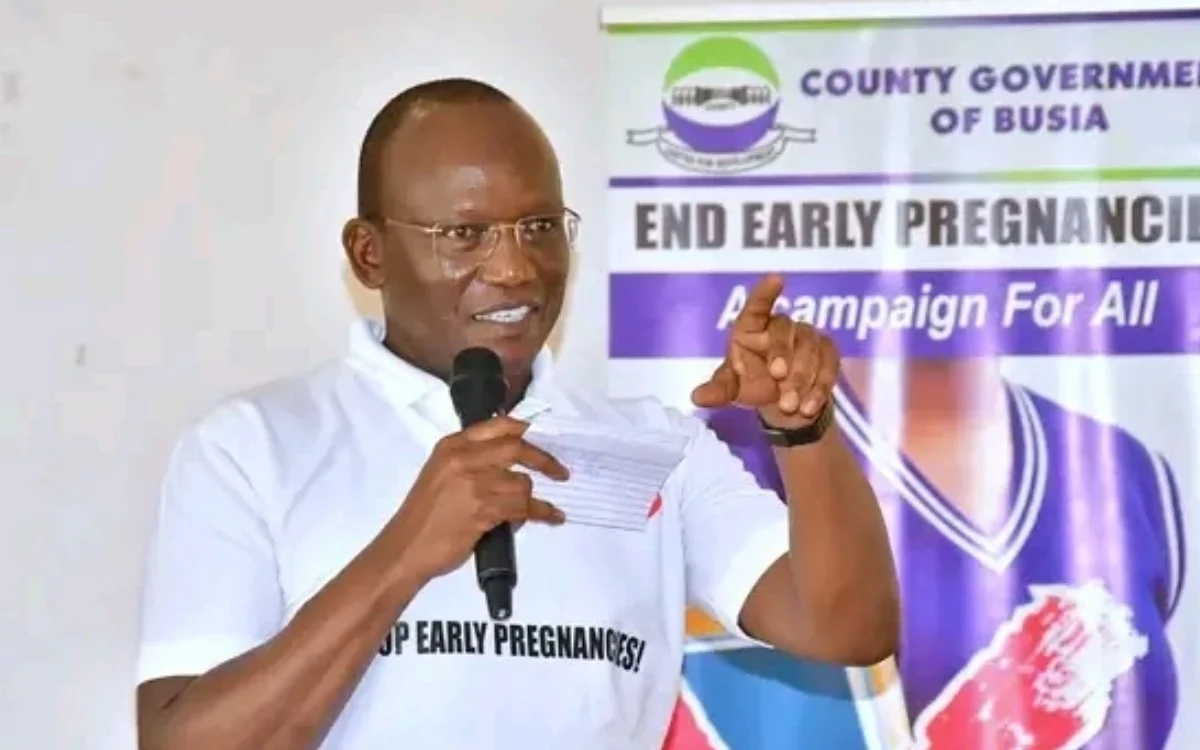
Busia County is targeting a reduction in teenage pregnancies from 16.9 per cent to 5 per cent as leaders and health stakeholders step up efforts to address sexual and gender-based violence, adolescent pregnancies and new HIV infections.
The county has called for stronger community action against practices that expose girls to abuse, with Deputy Governor and County Executive Committee Member for Health Arthur Papa Odera warning that society’s growing tolerance of the problem is undermining efforts to protect adolescents.
Speaking during a stakeholders’ meeting in Busia, Odera said existing county policies on sexual and gender-based violence, children and gender development could help reverse the trend if fully implemented. He challenged community leaders, parents and residents to stop treating abuse as normal and take collective responsibility for safeguarding young people.
Odera also urged men and boys to play a more active role in protecting girls, encouraging fathers, brothers and uncles to create safe environments where adolescents can openly discuss puberty, menstruation and other challenges without fear or embarrassment.
He said the fight against teenage pregnancies must extend beyond government programmes to families and communities, where harmful attitudes and silence can allow abuse to continue unchecked.
Busia County Commissioner Stephen Orinde backed the call, urging residents to abandon harmful cultural practices that contribute to sexual abuse and early pregnancies. He also stressed the need for coordinated action among government agencies and other stakeholders, warning that perpetrators would face action.
Orinde further highlighted the importance of keeping pregnant teenagers in school, noting that education policies provide for learners to continue their studies rather than have their futures cut short by early pregnancies.
The meeting also raised concerns over HIV infections among young people. County Adolescent and Youth Health Coordinator Daniel Afubwa said HIV infections among people aged 15 to 24 account for an estimated 45 per cent of infections in the group, compared with a national figure of 41 per cent, placing Busia sixth nationally, according to figures presented at the meeting.
Afubwa also cited gaps in identifying and linking people living with HIV to care, calling for better coordination of data to help health teams reach those who remain undiagnosed or outside treatment services.
The human cost of teenage pregnancy was brought into focus by Miss Achieng’, a teenage mother from Sio Port in Samia Sub-County, who shared her experience of overcoming stigma while carrying her pregnancy and caring for her one-month-old son.
Her account highlighted the challenges young mothers face and the need for communities to offer support rather than discrimination, while strengthening prevention and protection measures for other girls.
Stakeholders, including TIKO Africa, Mildmay, Y-Plus Kenya, the Kenya Red Cross Society, KMET, civil society organisations, peer educators and the provincial administration, agreed to strengthen collaboration in tackling the problem.
The resolutions include engaging men and boys as positive role models, establishing safe spaces for adolescents and survivors of abuse, harmonising reporting systems and expanding awareness campaigns in schools, health facilities and communities. Participants also called for stronger referral systems linking survivors to medical care, protection services and legal assistance.
The county’s target of reducing teenage pregnancies to 5 per cent will depend on sustained implementation of these measures, improved accountability and a community-wide commitment to confronting abuse and protecting adolescents.