
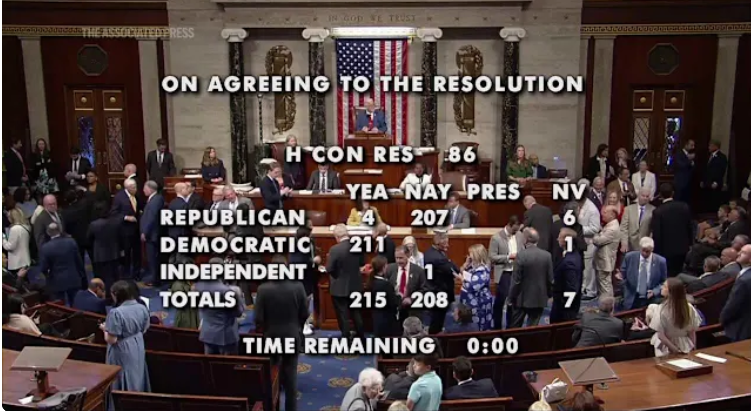
In a closely contested vote of 215 to 208, lawmakers signaled growing unease over the escalation of hostilities in the Gulf region. The measure seeks to reassert congressional oversight on matters of war, reflecting deep divisions within Washington about the proper balance of authority between the executive and legislative branches.
This House action follows a similar breakthrough in the Senate several weeks earlier, where the resolution advanced by a narrow 50-47 margin. Together, the votes demonstrate a rare moment of bipartisan momentum on Capitol Hill to constrain unilateral presidential decisions regarding Iran. Supporters argue that the resolution gives voice to widespread public concerns about prolonged conflicts and their potential to draw the United States deeper into regional instability.
Trump has already indicated he will issue a swift veto once the legislation reaches his desk, setting up a potential override battle that could test party loyalties in both chambers. The president views the resolution as an unwelcome interference in his foreign policy approach, particularly as diplomatic efforts involving Iran’s nuclear program remain fluid and delicate. His stance highlights ongoing tensions over how military decisions should be handled in an era of complex global threats.
The development underscores a classic constitutional friction point in American governance, where lawmakers are attempting to reclaim influence over matters of war and peace. As the resolution moves forward, it could shape the trajectory of U.S. involvement in the Middle East while fueling debates about institutional checks and the priorities of national security. Observers will be closely watching whether Congress can sustain this push or if executive resistance will ultimately prevail.