
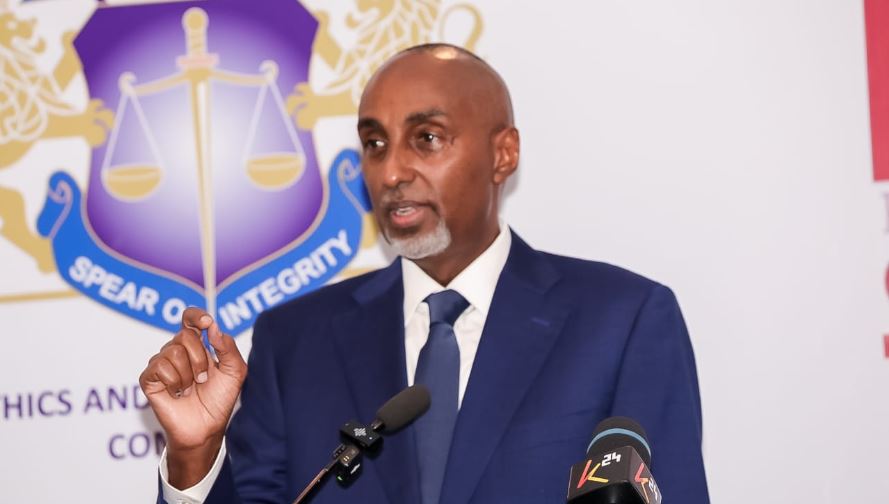
This practice, according to the anti-graft body, amounts to abuse of office and the misuse of taxpayer resources for self-promotion. In an advisory released by EACC CEO Abdi Mohamud, the commission highlighted an increasing trend where leaders seek to claim personal credit for projects that belong to the public.
Officials have been reminded that such actions violate key provisions of the Constitution, including Articles 10, 73, 75, and 201(d), alongside the Public Finance Management Act and the Leadership and Integrity Act. The EACC stressed that while acknowledging public service is valuable, turning development projects into personal billboards undermines public interest and promotes unethical conduct. Leaders are now directed to stop using public funds to advance their political or partisan agendas through these visible markings.
Public entities implementing projects have received clear instructions to ensure that any necessary recognition reflects only the responsible government body—whether national or county—and avoids any personal identifiers, portraits, or party symbols. This directive applies throughout the project's lifecycle, from planning to completion. The move aims to restore focus on collective achievement rather than individual political branding in the country.
The commission has vowed to monitor compliance closely, with violators facing potential administrative and legal consequences. This advisory comes as a timely reminder for leaders to prioritize service delivery over personal visibility. In Kenya, where public projects are vital for development, the EACC's stance reinforces the need for integrity and accountability in governance, fostering greater trust between citizens and their representatives.