
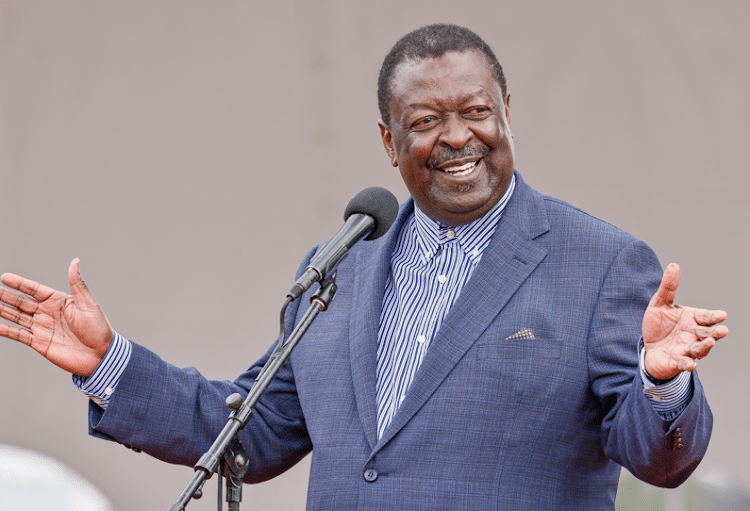
Mudavadi's declaration builds on his longstanding alliance with President Ruto within the United Democratic Alliance (UDA) and the broader Kenya Kwanza framework. Having merged his former Amani National Congress (ANC) into UDA, Mudavadi has emphasized unity under the ruling party as the most viable path for Western Kenya to ascend to national power. He has urged regional leaders and residents to rally behind UDA, arguing that supporting Ruto's re-election in 2027 will pave the way for a smoother transition in 2032. This approach reflects a calculated strategy: loyalty now in exchange for backing later, with Mudavadi framing it as the realistic route for the Luhya community and Western region to finally claim the presidency after decades of near-misses.
The statement has sparked a mix of reactions, from enthusiastic support among allies who see it as a natural progression to skepticism and humor online, where some question the timeline given Mudavadi's age—he would be in his late 70s by then—and others poke fun at the idea of extended elite continuity. Critics highlight concerns over whether such pre-arranged successions undermine competitive democracy, especially with constitutional term limits designed to encourage fresh faces and ideas. In a nation still navigating economic recovery, youth aspirations, and calls for inclusive governance, Mudavadi's early positioning serves as both a rallying cry for his base and a prompt for broader debate on how power should transfer in Kenya.
As the country looks ahead to the 2027 elections and beyond, Mudavadi's 2032 ambition underscores the evolving dynamics within the ruling coalition. Whether this evolves into a formal succession pact or faces new challengers remains to be seen, but his clear intent has already shifted conversations from speculation to concrete political reality. In Kenya's vibrant and often unpredictable political scene, such declarations keep citizens engaged, watchful, and ready to shape the future through their votes and voices.