
The Rironi-Mau Summit Road forms a key segment of the Northern Corridor, the primary trade route linking the Port of Mombasa to landlocked countries including Uganda, Rwanda, Burundi, South Sudan, and eastern Democratic Republic of Congo. The corridor handles a massive volume of goods and passenger traffic, but decades of heavy use—particularly from slow-moving heavy goods vehicles navigating hilly terrain—have led to chronic congestion, frequent accidents, and extended journey times.
The ongoing upgrade targets approximately 233 kilometers of the A8 highway (with some reports citing 175 km for the main dualling phase plus additional strengthening sections). It involves widening the road into a four-lane dual carriageway from Rironi to Naivasha, transitioning to six lanes in select high-traffic areas such as between Naivasha and Nakuru, and up to Mau Summit. Features include service roads in urban zones, non-motorized traffic provisions (cycle tracks and footpaths), grade-separated interchanges, overpasses, underpasses, and climate-resilient design elements.
President William Ruto officially launched the project on November 28, 2025, at Kamandura in Kiambu County. Implemented under a Public-Private Partnership (PPP) model, the initiative is divided into phases and involves major Chinese contractors: China Road and Bridge Corporation (CRBC) in partnership with the National Social Security Fund (NSSF) for one section, and Shandong Hi-Speed Road and Bridge International (SDRBI) for another.
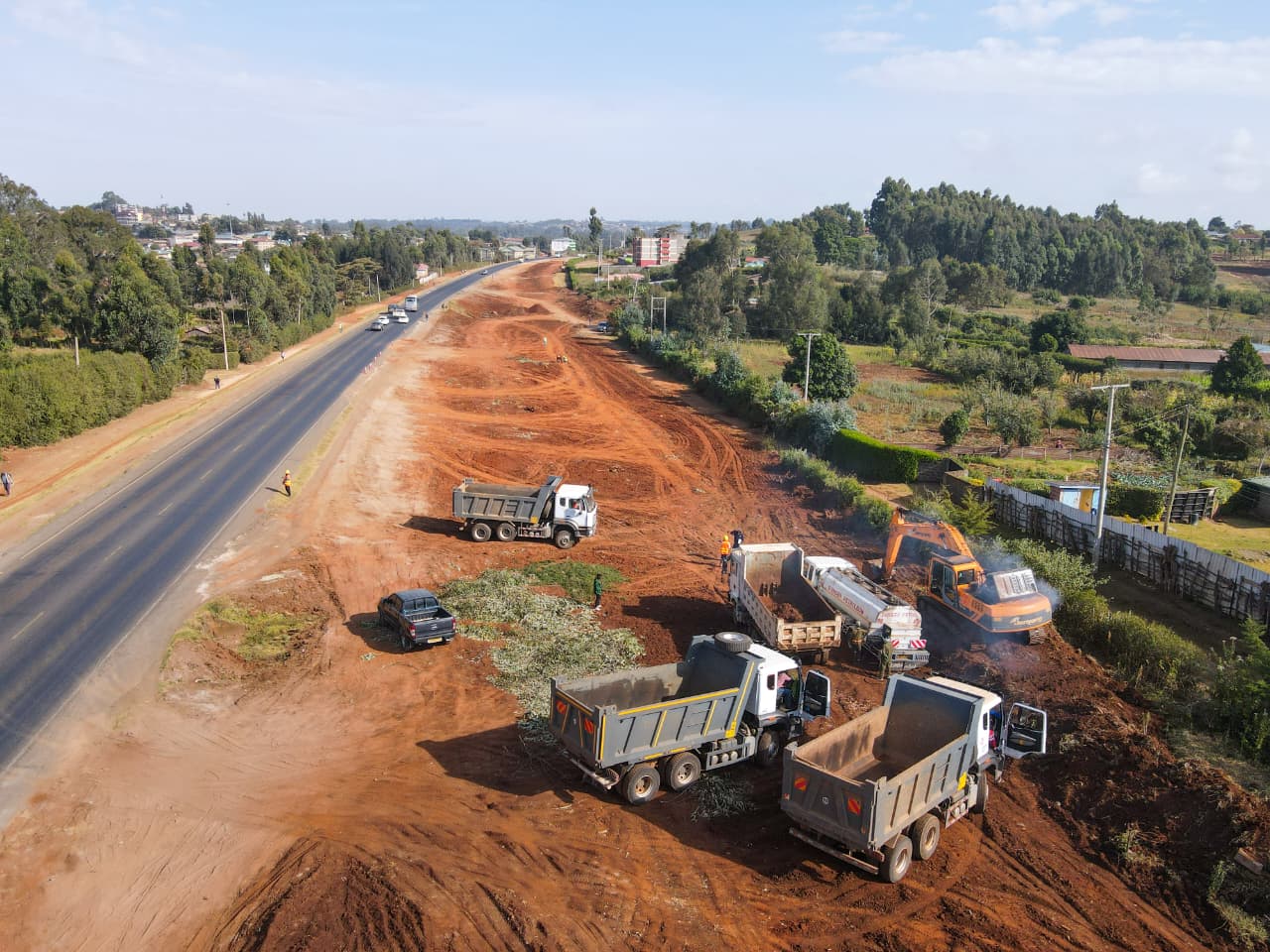
As of early 2026, works are progressing steadily. Earthworks, equipment mobilization, and site preparation are underway, with active construction on at least 25 kilometers reported in January. CRBC is handling the initial 5 km at Rironi and another 5 km at Gilgil, while additional sections are being mobilized. Transport Cabinet Secretary Davis Chirchir has indicated that by February 2026, up to 12 construction gangs will be operating simultaneously across the corridor to meet the ambitious timeline.
The project is expected to be completed by June 2027 (with some officials targeting April or May 2027), followed by a 28-year operation and maintenance period by the concessionaires. The total cost is estimated in the range of KSh 170–184 billion (approximately USD 1.3–1.4 billion across phases), funded through a blended debt-equity structure that includes private investment and NSSF equity participation. NSSF anticipates strong returns—around 18% annually in local currency terms—highlighting the project's viability as an infrastructure investment.
Upon completion, the upgraded highway is projected to:
Slash travel times between Nairobi and Western Kenya Lower vehicle operating costs for transporters Dramatically improve road safety by reducing overtaking risks and accident hotspots Boost regional trade volumes and economic integration Create thousands of direct and indirect jobs during construction and operation Open new investment opportunities along the corridor
This project complements broader corridor improvements, including parallel plans to expand the Mau Summit–Eldoret–Malaba section into a dual carriageway under PPP, with pre-feasibility studies now underway supported by the Asian Infrastructure Investment Bank (AIIB).
As heavy machinery continues to reshape the landscape along this strategic route, the Rironi-Mau Summit upgrade stands as a cornerstone of Kenya's infrastructure agenda—delivering long-awaited relief to commuters, truckers, and regional economies alike. Authorities urge road users to exercise caution in ongoing work zones to ensure safety during this transformative phase.