
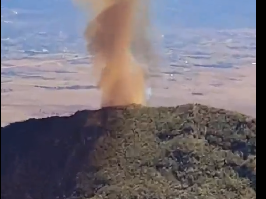
Social media quickly filled with viral videos and posts claiming the long-inactive mountain—last known to have erupted in 1863—was awakening, sending alarm through nearby communities in Naivasha and surrounding areas. The dramatic footage, showing billowing smoke and fire against the iconic crater rim, amassed hundreds of thousands of views on platforms like Facebook, X, and TikTok, with many users expressing fear and urging evacuations.
The Kenya Wildlife Service (KWS), which manages Mount Longonot National Park, swiftly intervened to dispel the rumors, confirming that the incident was a bushfire rather than any volcanic activity. Officials attributed the blaze—primarily on the southern slopes—to human causes, such as a discarded cigarette or deliberate burning of vegetation, a common trigger during the dry season.
By the time response teams contained and extinguished the fire, it had scorched approximately 40 hectares of bushland, but no injuries or structural damage were reported, and the park remained safe for visitors and hikers.
The false alarm highlights recurring challenges with misinformation in Kenya's volcanic regions, where similar bushfire incidents have previously been mistaken for eruptions, including notable cases in 2022. KWS emphasized the importance of verifying information through official channels to prevent unnecessary panic, while urging the public to avoid activities that could spark wildfires amid ongoing dry conditions. Authorities continue to monitor the area, reassuring locals and tourists that Mount Longonot remains geologically dormant with no signs of increased seismic or volcanic activity.