
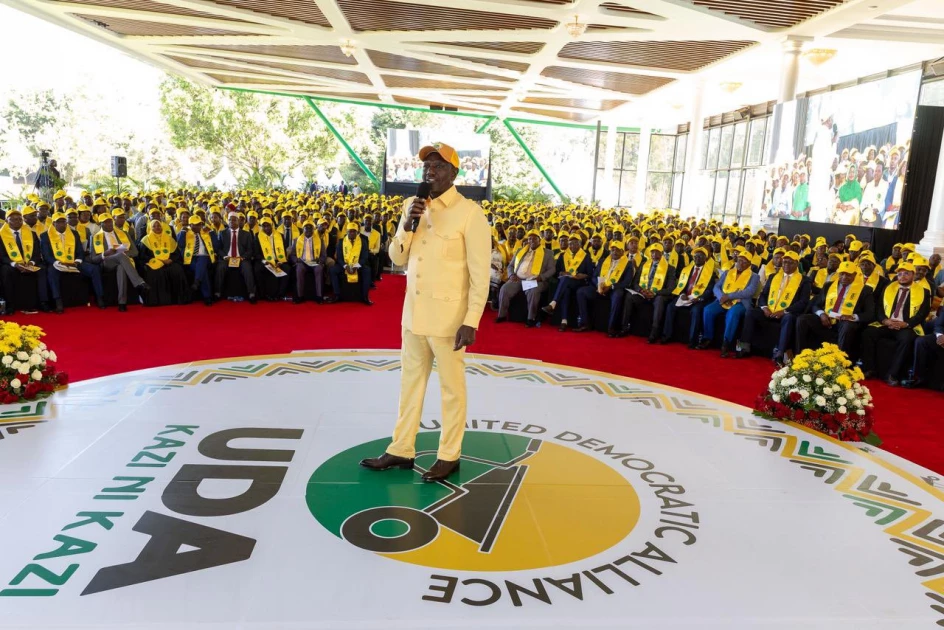
In a recent address to United Democratic Alliance (UDA) aspirants at State House, the President revealed plans to eliminate Pay As You Earn (PAYE) tax entirely for individuals earning less than KSh 30,000 per month. This change would benefit approximately 1.5 million formally employed Kenyans, allowing them to take home their full salary without any income tax deduction.
Additionally, Ruto proposed lowering the PAYE rate from 30% to 25% for those earning up to KSh 50,000 monthly. This adjustment is expected to provide further relief to another 500,000 workers, increasing their net pay and helping ease household financial pressures.
"When Parliament resumes next week, we will present a proposal that every Kenyan earning less than KSh 30,000 will not pay any taxes because we have steadied the economy," Ruto stated. He added, "Any Kenyan who earns up to KSh 50,000—we are reducing their taxes from 30% to 25%. 1.5 million Kenyans will not pay any taxes, and another 500,000 Kenyans will have their taxes reduced."
The initiative follows a similar announcement by Treasury Cabinet Secretary John Mbadi, who confirmed that the government intends to exempt over 1.5 million low earners from PAYE. The National Treasury plans to submit a Tax Laws Amendment Bill to Parliament for approval soon, ahead of the broader Finance Bill 2026.
According to government data, Kenya has roughly 3.65 million salaried workers in the formal sector, with about 1.5 million falling into the below-KSh-30,000 income bracket.
Ruto emphasized that these reforms were made possible by the administration's prior work in stabilizing the economy, which has created room to prioritize relief for ordinary citizens facing persistent economic challenges.
The proposals are positioned as part of a broader strategy to cushion vulnerable households and promote fairer taxation, with the changes set to take effect pending parliamentary approval.