
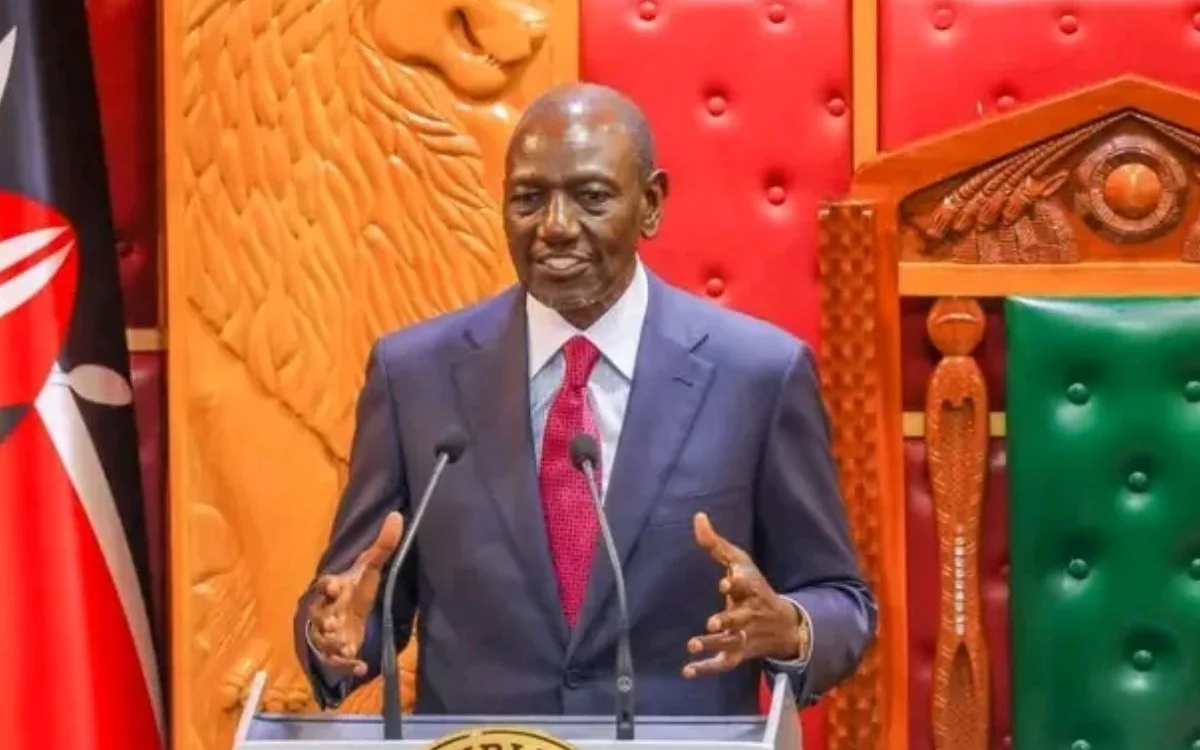
A decades-long dependence on foreign companies to print Kenya's national examination papers has come to an end, with President William Ruto announcing that the country has undertaken the exercise locally for the first time in 65 years
The shift, according to the President, has saved taxpayers approximately KSh1.5 billion, marking a major change in how the government handles the production of examination materials.
Addressing Parliament during his State of the Nation Address on Wednesday, November 18, 2026, Ruto said Kenya had previously relied on overseas printing firms, particularly in the United Kingdom, despite having local capacity to undertake the task.
He questioned the rationale behind outsourcing examination printing when the country was already capable of producing its own currency.
The locally printed papers covered the Kenya Primary School Education Assessment (KPSEA), Kenya Junior School Education Assessment (KJSEA), and Kenya Certificate of Secondary Education (KCSE).
The President presented the development as part of efforts to cut unnecessary public expenditures and strengthen local capacity.
For years, the printing of national examinations remained one of the services handled outside the country, making the latest development a departure from a practice that had lasted more than six decades.
The transition also places greater responsibility on local institutions to ensure examination papers are produced, handled, and distributed under strict security arrangements.
With the reported savings of KSh1.5 billion, attention will now turn to whether the government can sustain the arrangement and maintain the confidentiality and credibility of national examinations in subsequent years.