
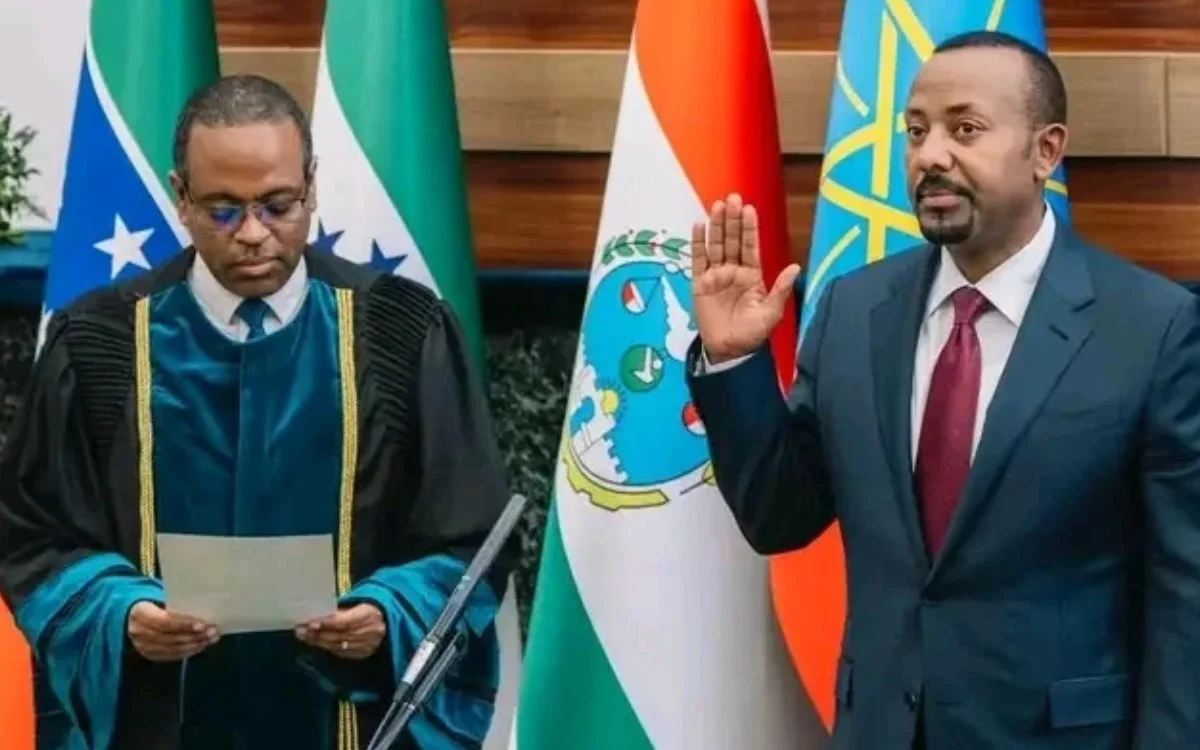
ADDIS ABABA, Ethiopia — Ethiopian Prime Minister Abiy Ahmed has been sworn in for a second five-year term, taking charge of the country as his government confronts persistent security concerns and growing regional tensions.
Abiy took the oath of office on Monday, October 5, during they opening session of Ethiopia’s seventh parliamentary term in Addis Ababa.
His reappointment followed the June 1 general election, in which the ruling Prosperity Party won 438 of the 486 parliamentary seats that were contested.
The result secured the party a commanding majority in the House of Peoples’ Representatives and cleared the way for the formation of a new federal administration.
Lawmakers also elected Ahmed Shide as Speaker of the House, with the new Parliament formally beginning its five-year term.
In his inaugural address, Abiy appealed for unity and urged citizens to place national interests at the centre of Ethiopia’s next phase of development.
He outlined three broad areas of focus for his administration: strengthening national security and stability, sustaining economic and social development, and advancing reforms.
The priorities come against the backdrop of renewed tensions in the Tigray region, where fresh clashes have heightened fears of a return to wider conflict.
Ethiopia is also dealing with sensitive regional questions over access to the Red Sea, an issue that has increasingly featured in the country’s foreign policy and relations with neighbouring states.
Abiy, who first assumed the premiership in 2018, now enters another five-year mandate with his Prosperity Party holding a substantial majority in Parliament.
The new term represents a fresh political chapter for Ethiopia, but the administration faces the challenge of balancing its development ambitions with the need to address security concerns and maintain stability across the country.
For Abiy, the swearing-in ceremony marks the formal beginning of his second term and a new phase in his leadership of one of Africa’s most populous nations.