
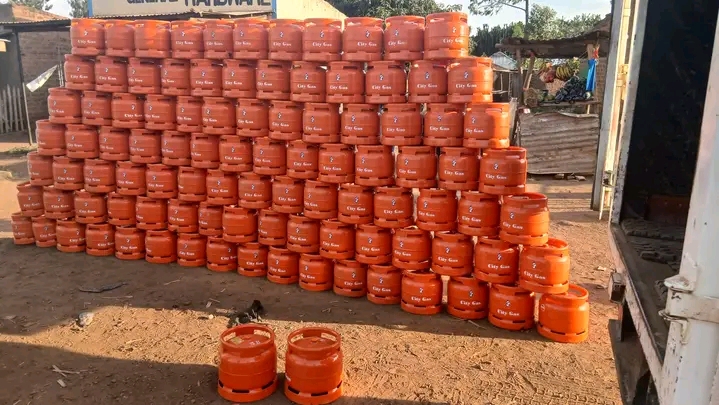
Kenyans could soon pay more for cooking gas after a sharp rise in international prices of propane and butane, two key components used to produce Liquefied Petroleum Gas (LPG).
The increase is expected to be felt in Kenya from October, with petroleum industry executives warning that higher international costs will translate into higher local LPG prices.
How Much Is Cooking Gas Currently?
The price of LPG already varies depending on the brand, location, and dealer.
Data reported from the August 2026 market shows that the average price of a 13kg LPG refill stood at KSh3,426.89 nationally, slightly lower than the KSh3,432.21 recorded in July.
At major outlets, however, consumers are paying different amounts. A 13kg cylinder is currently selling at around KSh3,400 at TotalEnergie, while Rubis Energy is retailing the same size at about KSh3,202.50, according to The Star.
For smaller households, a 6kg refill currently ranges between KSh1,100 and KSh1,600, depending on the brand, while a 13kg refill can range between KSh2,200KSh3,500
Why Prices Could Rise
The latest pressure is coming from international LPG markets.
Saudi Aramco data shows that the September contract price for butane increased by 25.8 per cent to $628 (about KSh81,326), from $499 in August. Propane, meanwhile, rose by 23.2 per cent to $494 (about KSh63,973), from $401.
Kenya sources a significant share of its LPG from Saudi Arabia and other Middle Eastern producers, making local prices sensitive to movements in international LPG costs.
The increase has been linked to supply disruptions in the Middle East, which have affected LPG exports and pushed international prices higher.
What It Means for Consumers
With the average 13kg refill already costing more than KSh3,400 nationally, any further increase could add to household expenditure on cooking fuel.
Unlike petrol, diesel, and kerosene, LPG retail prices are not capped by the government and are largely determined by market conditions and individual distributors.
The exact amount by which Kenyan LPG prices will rise in October has not yet been established. However, industry players expect consumers to feel the impact of the higher international propane and butane costs.