
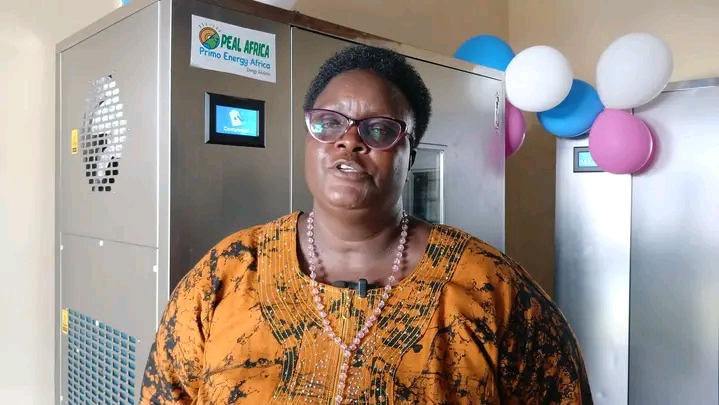
Women fish traders operating along the Kenya-Uganda border in Busia have received a major boost following the launch of a solar-powered fish dryer expected to transform fish preservation, processing, and cross-border trade
The facility, provided through TradeMark East Africa and other partners, is part of equipment worth more than 10 million shillings aimed at strengthening the fish value chain, reducing post-harvest losses and improving the livelihoods of traders who depend on the sector for their income.
For years, women have struggled with inadequate facilities for drying, preserving, and storing their fish, exposing them to significant losses and limiting their ability to expand their businesses.
The traders have largely relied on traditional drying methods, which are heavily dependent on weather conditions. During rainy and humid periods, drying fish has been particularly difficult, with some products spoiling before they can reach the market.
The lack of proper storage has also forced traders to sell their fish quickly, sometimes at low prices, simply to avoid making complete losses.
These challenges have not only affected their incomes but also limited their ability to add value to their products and take advantage of the growing cross-border market between Kenya and Uganda.
The new solar-powered dryer is expected to change this situation by providing traders with a more reliable and efficient way of processing and preserving fish.
The facility will enable the women to dry their products under improved conditions, increase their shelf life, and reduce wastage, allowing traders to keep their products for longer as they seek better markets and prices.
The intervention is also expected to create opportunities for value addition, enabling the traders to move beyond selling fresh fish and explore processed and packaged fish products.
Speaking during the launch of the facility in Burumba, Busia town, Andrew Cheboi, an official from Kilimo Trust Africa, said the machine is expected to generate more than 300,000 employment opportunities within the border area, with Kenya projected to benefit significantly from the investment.
Cheboi said the facility would contribute to strengthening economic activities around the border while opening up new opportunities for people involved in fish production, processing, transportation, and trade.
For the women traders, the new equipment represents an important step towards addressing challenges that have affected their businesses for years.
Led by their chairperson Florence Atieno, the traders welcomed the intervention, saying it would help advance their plans to expand fish trade and take advantage of the strategic position of Busia as a major cross-border trading hub.
The traders said access to modern drying and processing equipment would give them greater control over their products, reduce losses, and improve their ability to serve markets on both sides of the border.
"This equipment will help us reduce the losses we have experienced for years due to poor drying and storage. It will also improve the quality of our fish, support value addition, and help us expand our businesses and reach wider markets.”~ Florence Atieno
The women said the facility would also give them an opportunity to improve the quality of their products and increase their earnings while creating room for more women to participate in the fish value chain.
Officials involved in the project also commended the women for their role in supporting economic activity at the Busia border.
Mercy Masai, an official from Industrial Support Ltd Energy, and Nelson Muhanji, Director of Primo Energy Africa, praised the determination of women fish traders in Busia to grow their businesses and contribute to the wider economy.
They noted that supporting women-led enterprises at the border was critical in strengthening local livelihoods while contributing to national economic growth.
"We are proud to support these women with modern equipment that will reduce post-harvest losses and create opportunities for value addition, employment, and increased trade. Their efforts are important to the growth of Busia’s economy.” ~ Mercy Maasai
Fish remains an important source of food, employment, and income for communities living along the Kenya-Uganda border, with the sector supporting thousands of people directly and indirectly.
Busia's strategic location also makes it a key gateway for trade between Kenya and Uganda and the wider East African region. However, traders have previously struggled to fully exploit this opportunity because of limited processing infrastructure and inadequate access to modern equipment.
The solar dryer is therefore expected to strengthen the fish value chain by improving preservation and creating opportunities for processing, packaging, transportation, and marketing.
The investment could also enable traders to access wider markets and potentially earn better returns from their products.
For the women, the intervention comes as an opportunity to move away from a cycle of post-harvest losses and low returns towards a more structured and profitable fish business.
With improved processing capacity, they hope to increase the volume of fish they can handle, preserve products for longer, and gradually expand their businesses beyond the immediate border market.
The project is also expected to create employment opportunities while strengthening women's participation in cross-border commerce.
As Busia continues to position itself as a major commercial gateway between Kenya and Uganda, the traders hope the new facility will help them play a bigger role in the region's growing economy.
For women who have spent years battling poor drying methods, unpredictable weather, inadequate storage and heavy post-harvest losses, the solar-powered fish dryer offers renewed hope of building more sustainable businesses and turning fish trading into an even more profitable enterprise.