
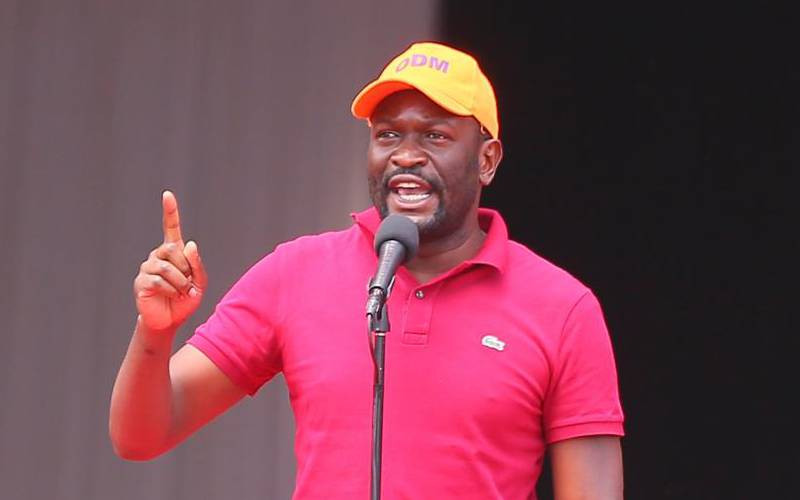
Sifuna's remarks, made during a televised interview on Citizen TV, highlight growing fractures within the opposition party as it grapples with succession in the wake of Odinga's passing.
According to Sifuna, the ODM Constitution stipulates that upon the death or incapacity of the party leader, one of the deputy party leaders should assume temporary charge. This interim arrangement is meant to hold until a special National Delegates Convention (NDC) can be convened within three months to elect a substantive leader. "The installation of Oburu Oginga as interim party leader was not procedural in accordance with the provisions of the Constitution," Sifuna stated, emphasizing that the process should have allowed deputies to act in rotation for stability. He revealed that he was absent from the key meeting where Oburu was appointed, as he was tasked with repatriating Raila Odinga's body from Mumbai, India, where the former prime minister had been receiving medical treatment.
Sifuna's critique comes amid speculation about his own position within the party. Reports indicate mounting pressure for his ouster as Secretary General, with some factions viewing his comments as defiant. In the same interview, Sifuna dismissed rumors of his expulsion, asserting, "I am in ODM and nobody can kick me out." He reiterated his commitment to the party, noting that membership does not depend on holding an official post, even as internal restructuring threatens his role.
Oburu Oginga, who was swiftly installed as acting party leader shortly after Raila's death in late 2025, has defended his position while downplaying any notions of permanence. In a recent appearance on KTN News, the veteran politician dismissed claims that he is positioning himself as Raila's permanent replacement, stating that his role is temporary until the party's top organs convene. However, Sifuna pointed out that three months have elapsed since Odinga's death without an NDC being called, fueling concerns over procedural lapses.
The controversy has spilled onto social media, with X users amplifying Sifuna's statements. Posts from influential accounts, including those from journalists and political commentators, have echoed his claims, sparking widespread discussion about ODM's future direction. Some netizens question the haste in Oburu's appointment, while others defend it as necessary to prevent a leadership vacuum in a party central to Kenya's opposition landscape.
Background on the succession saga traces back to Raila Odinga's death in November 2025, which left a void in ODM—a party he founded in 2005 and led through multiple presidential bids. Oburu's installation was announced by party officials, including Suna East MP Junet Mohamed, who justified the move as essential to maintain order amid national political demands. Yet, critics like Sifuna argue it skirted democratic processes outlined in the party's constitution.
Tensions have escalated further with reports of clashes between Oburu and other leaders, including Deputy Godfrey Osotsi and Sifuna himself. A recent private meeting between Sifuna and Oburu aimed at fostering unity, but sources indicate underlying divisions persist.Political analysts suggest this infighting could weaken ODM ahead of the 2027 general elections, potentially benefiting rival coalitions.
As the debate rages, calls for a special NDC grow louder. ODM insiders say the convention could resolve the leadership question, but until then, the party remains in limbo, with Sifuna's outspoken stance positioning him as a key figure in the unfolding drama.