
Farm guide · Sources checked 23 September 2026
Seed is a small package carrying a large part of the season’s risk. Before paying, a farmer should be able to identify what is in the pack, where it came from and whether it suits the intended growing conditions.
KEPHIS describes a verification system in which a buyer scratches the security label on a participating seed pack and sends the concealed code by SMS to 1393. The agency identifies the label as a tool for checking certified seed and tackling counterfeits. See the guidance.
Verification is only the first decision
A genuine pack can still be the wrong choice for a particular field or planting window. Ask an extension officer about the variety, expected maturity period and local conditions. KALRO’s agriculture platform provides crop resources that can support that discussion.
Keep the receipt and packaging, including the variety and batch information. If the label is missing, unreadable or gives an unexpected response, resolve the discrepancy with the seller and KEPHIS before relying on a verbal assurance.
A short record helps later
Write down where the seed was purchased, the date, the quantity and the field where it was planted. If a problem emerges, a precise record is more useful than reconstructing the purchase from memory.
Certification is not a guarantee of harvest size. Rainfall, soil and crop management still matter. Verification reduces uncertainty about the seed itself; agronomic advice addresses whether it fits the farm.
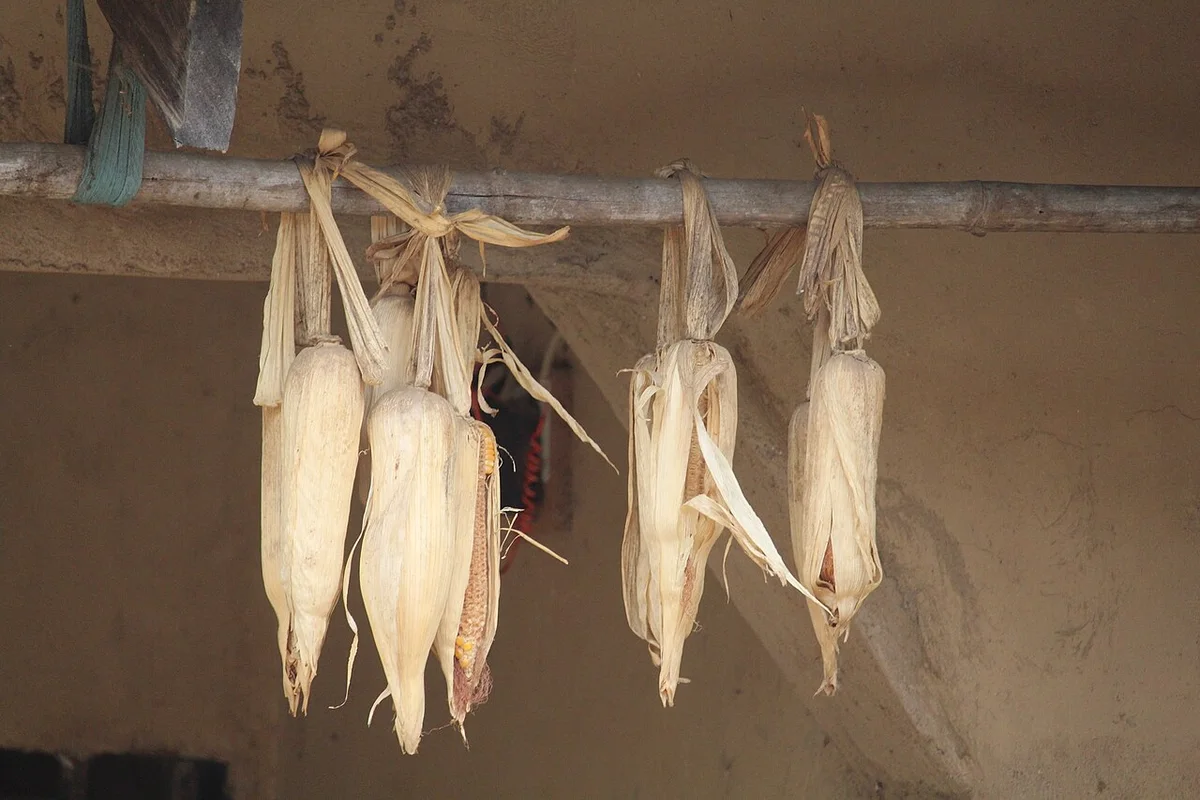
Reporting note: Prepared with AI assistance from the official sources linked in this article. Photo: Danjuma Anthony / Wikimedia Commons, CC BY-SA 4.0. Stored maize cobs. Context photograph; not an endorsement of a certified seed product. Resized for display.
_seeds_07.jpg)