
Farm guide · Sources checked 23 September 2026
A good crop can still lose value between harvesting and sale. Drying, handling and storage deserve a place in the farm budget alongside seed and fertiliser.
KALRO’s post-harvest guidance identifies moulds and mycotoxins, including aflatoxins, among the hazards affecting maize. It stresses prompt drying and clean, dry storage away from the ground. Its cereals programme resources also cover drying, grading and storage practices.
Make storage a planned stage
Before harvest, identify where grain will be dried, how it will be protected if rain interrupts work and where bags will be kept. Ask a qualified agricultural adviser or the intended buyer how moisture will be measured and which quality requirements apply.
Do not substitute a visual check or a hand test for an appropriate measurement. Grain that appears acceptable is not, on that basis alone, proven free of contamination.
Keep batches traceable
A simple lot record can capture the field, harvest date, drying period and storage location. If a buyer queries a batch, those notes help establish which grain is involved and what happened to it.
Avoid mixing a suspect batch with sound grain to improve its appearance. Seek competent advice and testing where contamination is suspected; this article does not offer a way to make contaminated maize safe for people or animals.
For growers selling later, the calculation includes storage costs and quality risk, not just an expected future selling price. Preserving the harvest is an operational task, and a higher market price is not guaranteed.
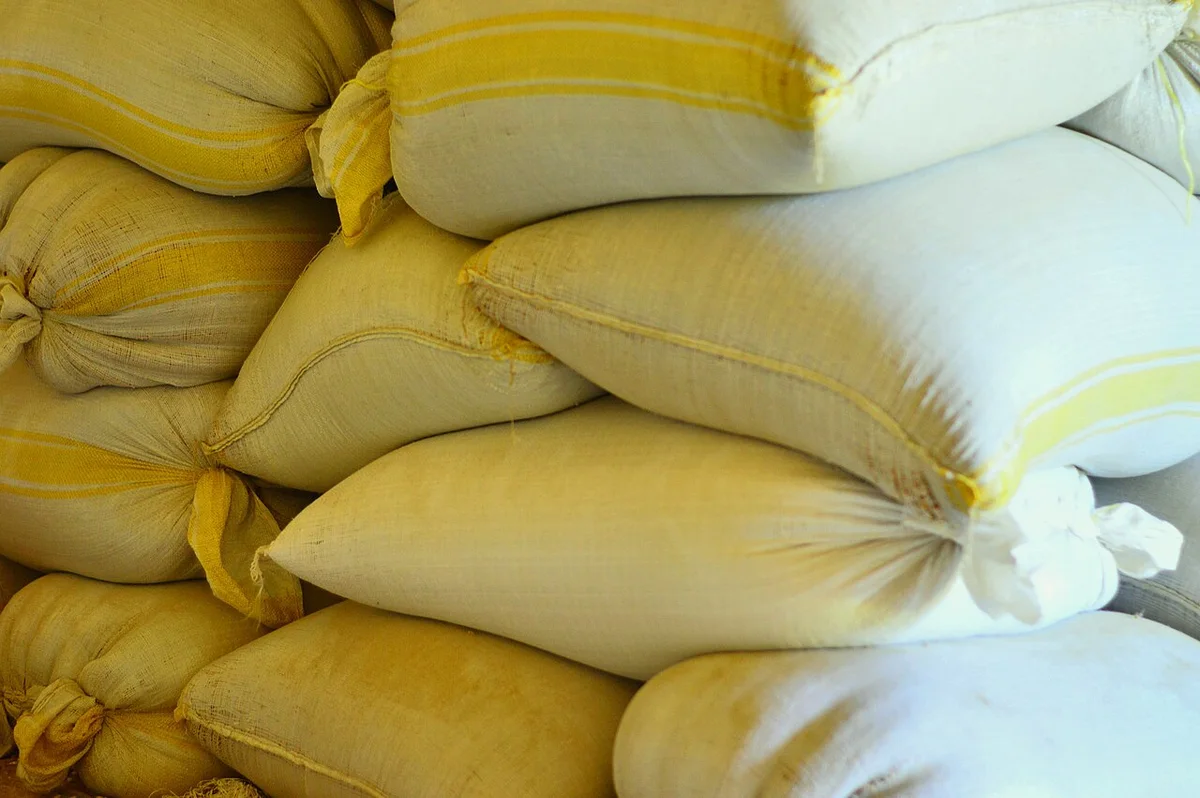
Reporting note: Prepared with AI assistance from the official sources linked in this article. Photo: Cut angles / Wikimedia Commons, CC BY-SA 4.0. Sacks of dry maize. Context photograph. Resized for display.
