
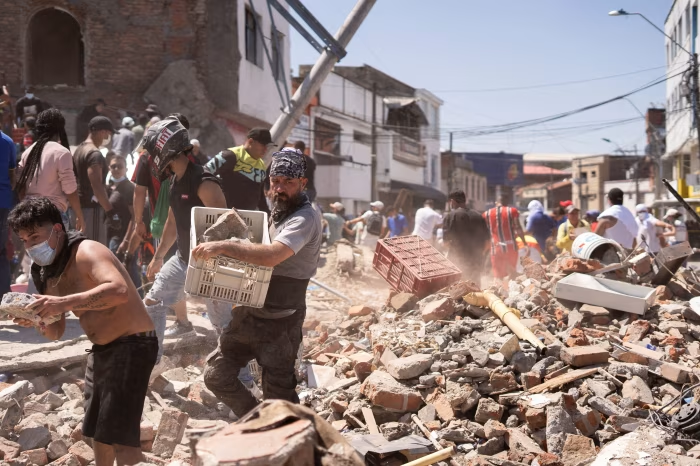
The tremor, which occurred at 07:34 local time at a depth of 103 kilometres beneath Chocó province, was felt across hundreds of kilometres and ranks among the strongest to affect the country in recent years. Officials warn that the death toll is expected to climb as rescue teams continue searching for people still trapped beneath collapsed structures.
The heaviest losses were recorded in the city of Pereira within Colombia’s coffee-growing heartland, where at least 40 people died and 65 buildings collapsed. Local authorities reported that individuals remained trapped in fifteen of those structures, while a curfew was imposed in parts of the city until early Tuesday. Further south in Cali, thirty-two buildings fell, and additional fatalities were confirmed in Manizales, Quibdó, Medellín and other towns across the Chocó and Valle del Cauca regions. More than 480 people sustained injuries nationwide.
Eyewitness accounts captured the terror of the moment. British visitor Dan Cutler, staying in Cali, described waking to the violent shaking and racing outside in his nightclothes. In Manizales, Angélica Ávila recalled walls cracking and bricks tumbling as people screamed, while local journalist Luis Felipe Molina said the experience was “terrible and terrifying,” noting that books flew from shelves and glass shattered despite the city’s strict seismic building codes. Near the epicentre at San José del Palmar, the local mayor reported the remarkable absence of casualties even though access roads suffered damage.
President Abelardo de la Espriella, only days into office, declared a national disaster situation that grants special powers to redirect resources. More than 1,500 homes were reported damaged, and several regional airports sustained structural harm. Shaking was felt as far away as Bogotá, where trees and traffic lights swayed and minor cracks appeared in buildings, as well as in neighbouring Venezuela, Ecuador and Panama. International partners including the United States, the European Union and El Salvador swiftly offered monitoring support, satellite imagery and rescue assistance.
Deep-focus earthquakes of this type typically cause less surface destruction than shallower events, yet the energy released still proved highly damaging to buildings across a wide area. As search and rescue operations continue under emergency powers, Colombia confronts the immediate human cost while beginning the longer task of assessing infrastructure losses and supporting affected communities in the wake of one of its most significant seismic events in years.