
Border-trade guide · Sources checked 23 September 2026
For a small trader, the difficulty at a border is not always the size of the shipment. It can be uncertainty about which procedure applies and which document proves that it does.
COMESA’s trade-liberalisation overview describes the Simplified Trade Regime as a way to reduce the cost and complexity of qualifying small-scale cross-border trade through simplified documentation and clearance procedures.
Four things to establish before travelling
A COMESA policy review published after an August 2024 dialogue identifies four building blocks: a simplified certificate of origin, a simplified customs document, an agreed common list and a consignment-value threshold. That dated account describes a US$2,000 threshold; it is not a substitute for confirming today’s rules at the intended crossing.
Ask whether the countries and crossing involved implement the relevant arrangement, whether the goods are on the agreed list, what origin evidence is required and which value limit applies.
Keep the goods description precise
Prepare an accurate list of the products, quantities and values, with supporting receipts or invoices. A general description such as “shop goods” may leave important questions unanswered.
Simplified clearance is not permission to ignore food-safety, plant-health or other product-specific controls. Check those requirements separately with the competent authorities.
For traders using western Kenya’s border routes, the practical benefit is preparation: resolve the eligibility questions before paying for transport. This guide explains what to verify and does not certify any individual consignment for preferential treatment.
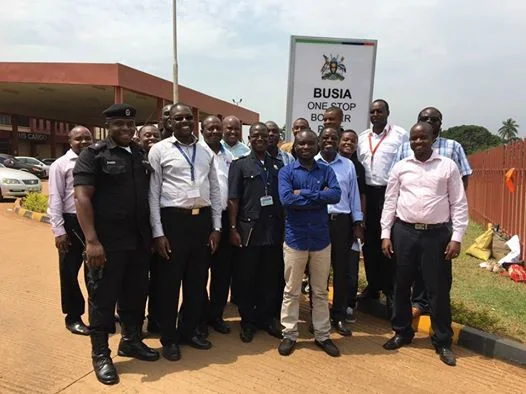
Reporting note: Prepared with AI assistance from the official sources linked in this article. Photo: Josephat.yator / Wikimedia Commons, CC BY-SA 4.0. Busia border post. Archive photograph; people pictured are not identified as participants in this article. Resized for display.
