
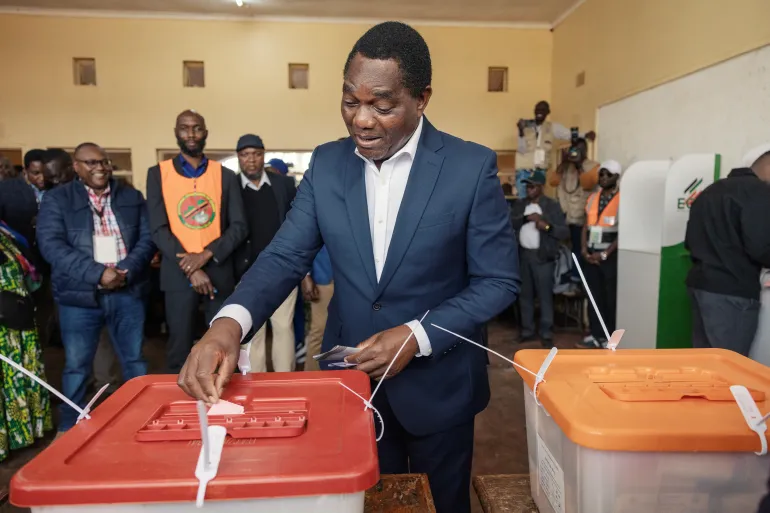
The electoral commission announced early on Tuesday that the 64-year-old incumbent captured roughly 61 percent of the valid ballots, while his primary rival, Brian Mundubile, finished with about 38 percent. Commission chairperson Mwangala Zaloumis formally declared Hichilema the president-elect, marking the end of a contest that had grown tense in its final stages.
This victory marks Hichilema’s seventh attempt at the nation’s highest office and comes as little surprise given the clear advantages of incumbency. For Mundubile, a relative newcomer to presidential politics, the result represented a first and ultimately unsuccessful bid for power. Roughly five million citizens cast their votes in a country of 22 million that remains Africa’s second-largest producer of copper and has maintained a proud tradition of peaceful leadership changes at the ballot box since multiparty democracy returned in 1991.
Supporters of the United Party for National Development poured into the streets of Lusaka in a wave of celebration once the outcome became clear. Dressed in the party’s signature red, they sang, danced, and set off firecrackers to mark the moment. Hichilema himself struck a measured tone in his victory message, saying he felt “truly humbled by the trust you have placed in our hands” and assuring those who backed other candidates that “We hear you, and we will continue to work for you.”
The campaign’s quieter weeks gave way to sharp friction once polling ended. Authorities arrested eleven people, among them prominent opposition figures, in a raid that involved gunfire and took place while Mundubile was present. Officials described the operation as a response to alleged militia activity involving military-grade weapons intended for insurrection. The opposition rejected that account, insisting the raid targeted Mundubile’s residence and left a member of parliament wounded. Vote counting itself was briefly halted the following day amid reports of attacks on polling staff and stolen ballot papers.
Mundubile later raised concerns about possible tampering with result forms and demanded an independent inquiry, claims that Hichilema’s camp dismissed as false. International observers, including a European Union mission, judged the voting day itself largely peaceful yet noted that late legal shifts and unequal campaign conditions had limited fundamental freedoms and tilted the playing field. As the nation absorbs the outcome, attention now turns to how the newly re-elected leader will govern a copper-rich economy still navigating the complexities of democratic competition.