
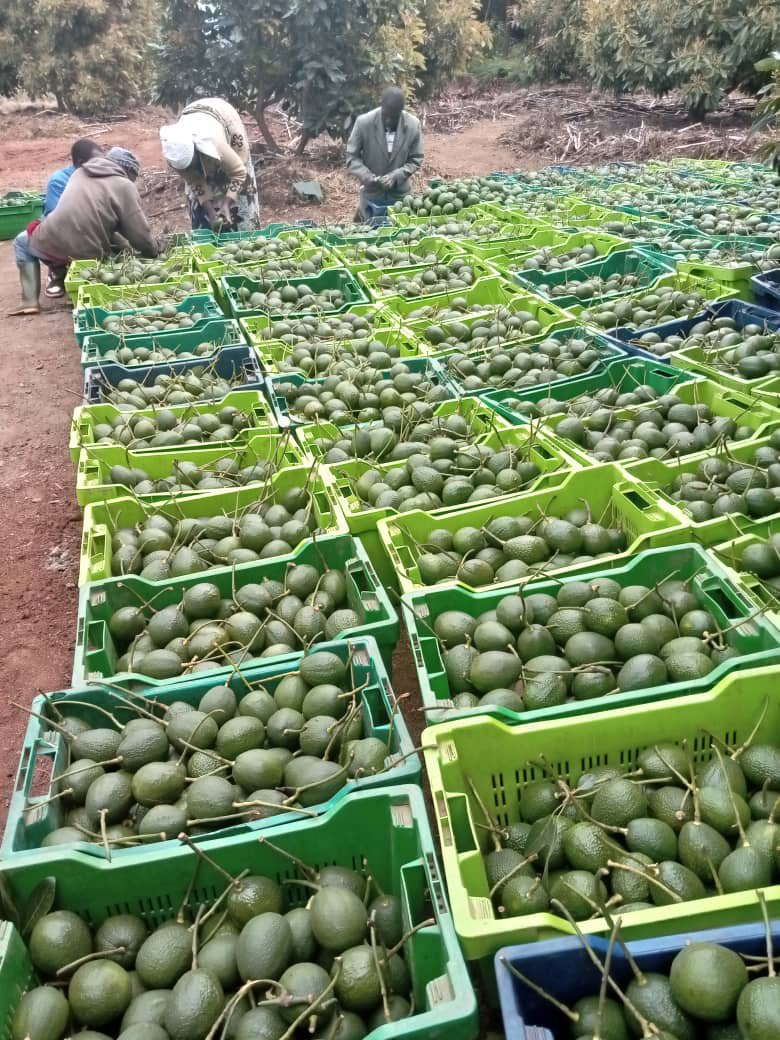
Official estimates place 2023 production at around 542,000–633,000 tonnes, while the United States Department of Agriculture’s Foreign Agricultural Service projects a record 694,000 tonnes for 2025 and approximately 727,000 tonnes for 2026. This solidifies Kenya’s position as the continent’s top grower and one of the world’s sixth-largest producers overall.
Avocado cultivation thrives across more than 30 counties, benefiting from Kenya’s diverse highland climates that allow near year-round production. Key growing areas include Murang’a (often the top-producing county), Kisii, Nyamira, Kiambu, Nakuru, Nyeri, Meru and others. The Hass variety dominates exports due to its longer shelf life and market preference, followed by Fuerte, with other types such as Pinkerton and local “Jumbo” varieties also grown. Much of the production comes from smallholder farmers, though commercial orchards are expanding.
The industry has grown rapidly over the past decade, driven by strong international demand, government support through quality seedlings and training, expanding planted area (now tens of thousands of hectares), and improving yields. Avocados have become an important cash crop, providing income for hundreds of thousands of farmers and contributing substantially to horticultural export earnings. In recent years export volumes have ranged around 120,000–135,000 tonnes annually, generating revenues often exceeding $150–170 million, with major markets in Europe (especially the Netherlands, Spain and France), the Middle East (including the UAE), and growing destinations such as China, India and others
Domestic consumption accounts for a large share of production, while avocado oil processing has also surged as a value-addition opportunity. The sector supports livelihoods, foreign exchange earnings and rural development, positioning avocados as one of Kenya’s success stories in high-value agriculture.Challenges remain. Quality issues, including premature harvesting, have prompted temporary export controls by the Agriculture and Food Authority to protect the country’s reputation in international markets. Logistics disruptions, such as those affecting Red Sea shipping routes, have impacted export volumes and competitiveness at times. Competition from other producers, weather variability, and the need for better post-harvest handling and cold-chain infrastructure continue to shape the industry’s trajectory.Despite these hurdles, the outlook is positive. Expanding acreage, maturing orchards, improved farming practices and rising global demand for avocados point to continued growth. Kenya’s favourable climate, entrepreneurial farmers and strategic market access efforts have made it the clear leader of Africa’s avocado boom—a crop that has transformed from a relatively minor produce into a major economic contributor.
Kenya has firmly established itself as Africa’s avocado giant, turning the fruit into a symbol of agricultural opportunity and export potential on the continent.