
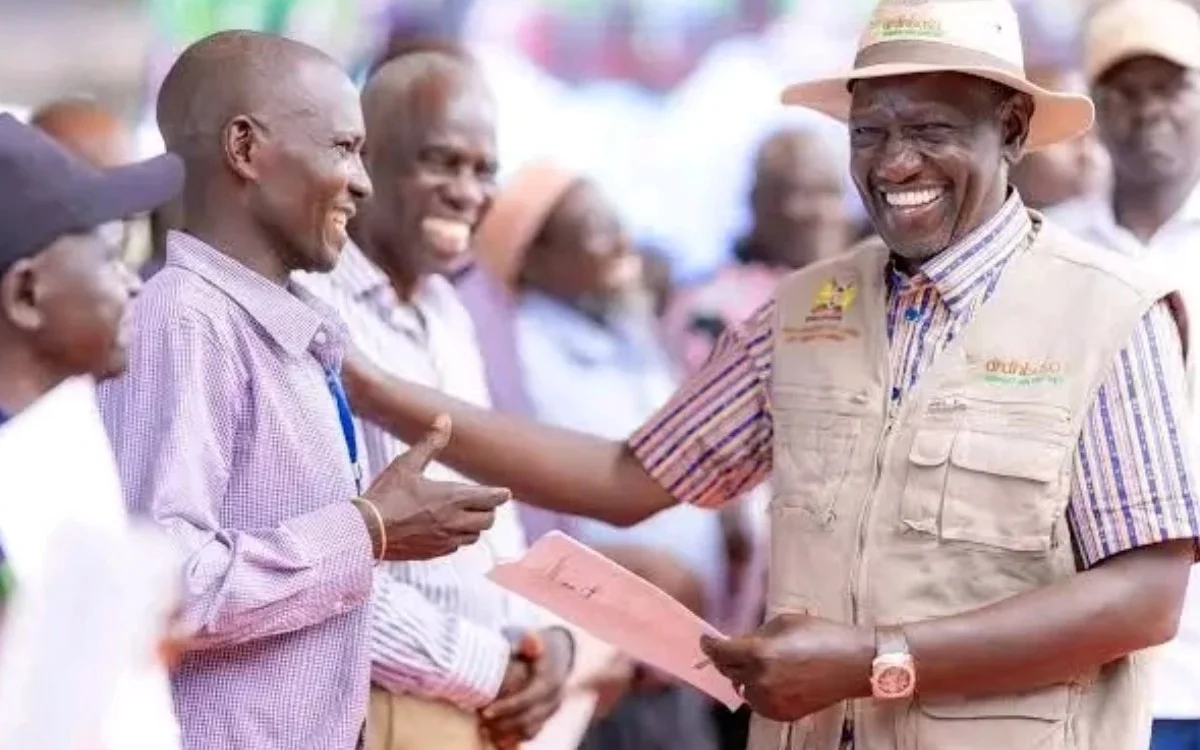
A government land-titling drive in Kwale has run into resistance, with residents questioning the size of parcels captured in title deeds recently issued to them.
Residents from Lunga Lunga, Mwereni, Kigana, Mkono wa Ndungu, Gombato, and Anzwani ranches say the documents have reduced the land they have occupied and cultivated for generations to 50-by-100-foot plots.
For them, the issue is not the title deed itself but what it represents.
“We appreciate the President for giving us title deeds, but they do not reflect the reality. We have shambas, not plots,” said Buda Mbwana, a resident of Anzwani village, on Monday.
The residents maintain that their families have historically used sizeable agricultural parcels, which they say can not be accurately represented by the small plots indicated in the new documents.
They are demanding that the government suspend the disputed allocations, revoke the affected titles, and undertake a fresh adjudication exercise guided by what they regard as ancestral boundaries.
The community also claims that the area’s population has grown significantly over the years. According to residents, the settlement once had about 900 people but now has more than 2,000 intensifying competition for land.
They further alleged that many residents did not receive title deeds during the exercise, with some claiming that about 75 per cent of those allocated land were left without documents. They also say some people regarded as original landowners were excluded.
The concerns come days after President William Ruto issued more than 26,000 title deeds at Kibaoni in Lunga Lunga on September 28.
The issuance formed part of a wider programme targeting more than 94,000 titles in Kwale County as the government seeks to address long-standing land ownership and squatter challenges along the Coast.
The government has said it intends to issue 500,000 title deeds across the Coast by the end of the year.
But in the affected Kwale settlements, residents say securing ownership must go beyond issuing documents. They want the authorities to return to the ground, establish the boundaries of the land traditionally occupied by families, and resolve outstanding claims before fresh titles are processed.
For the residents, the demand is simple: a title deed should reflect the land they actually call home.