
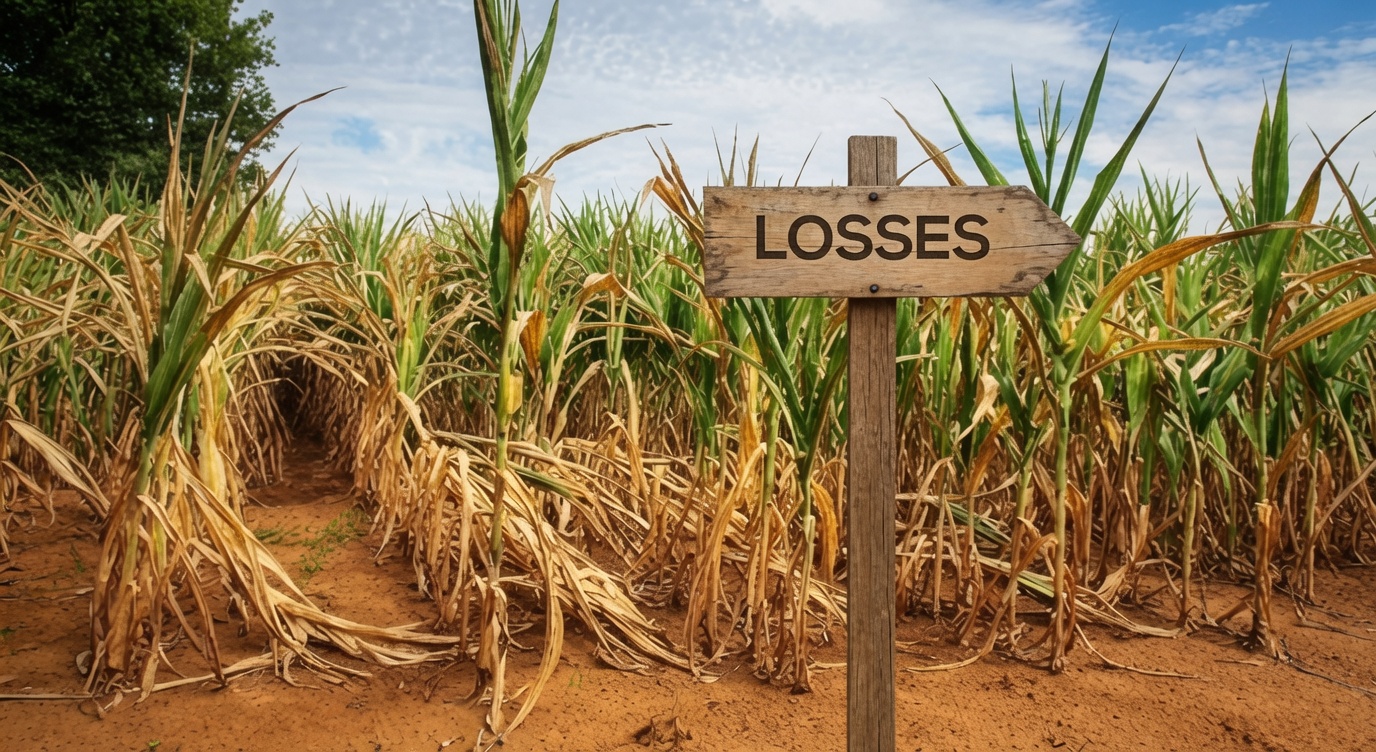
Thousands of maize farmers in Trans Nzoia County and some parts of Rift valley are facing great losses after a prolonged drought destroyed acres of maize, threatening food security and livelihoods in one of Kenya's leading maize producing regions.
The prolonged dry spell, experienced during the critical growth stage of the crop, left vast maize fields withered before they could mature. Farmers who had invested heavily in quality seeds, fertilizer, land preparation, and labour now fear they may not recover the money spent this planting season.
Many affected farmers expressed disappointment, saying they had hoped for the best harvest after favourable planting conditions at the beginning of the season. However, weeks of little to no rainfall resulted in poor crop development, leaving many farms dry and unproductive.
Some farmers have already begun clearing their fields after realizing there is little chance of harvesting any meaningful yield in this season.
The drought has not only affected farmers but is also expected to have a significant impact on the country's food supply. Agricultural experts warn that reduced maize production could lead to shortages in the market, pushing up the prices of maize flour and other food products that depend on the crop.
County agricultural officers have begun assessing the extent of the damage across the affected areas. Reports indicate that thousands of farming households have been affected, with many now calling on both the county and national governments to provide urgent assistance.
Farmers are appealing for subsidized farm inputs, financial support, irrigation projects, and compensation to help them recover from the losses and prepare for the next planting season.
Experts are also urging farmers to embrace climate smart agriculture by adopting drought tolerant seed varieties, water harvesting techniques, and modern irrigation systems to reduce the effects of unpredictable weather patterns caused by climate change.
As the county continues to assess the destruction, many farmers remain hopeful that timely government intervention and long term investment in resilient farming practices will help restore production and protect Kenya's food basket from similar disasters in the future.