
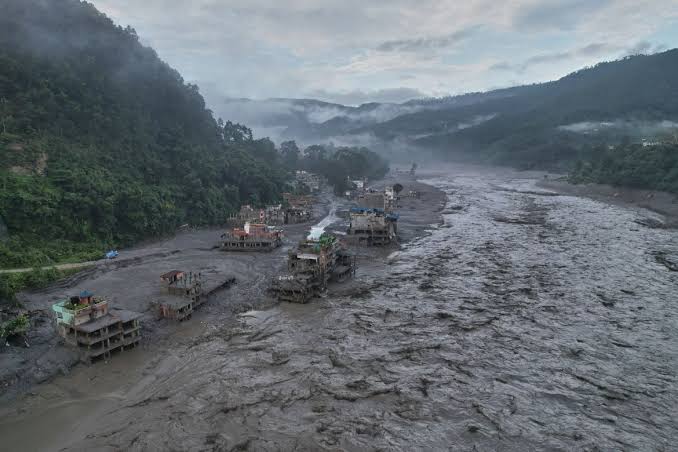
Of those still unaccounted for, 3,655 are Nepali citizens while 592 are foreign nationals whose families across multiple continents wait for any word. The disaster struck on Wednesday when a sudden surge of water, ice, rock and debris tore through northern and central districts near the border with Tibet, sweeping away homes, roads, bridges and entire stretches of riverside settlements in a matter of minutes.
Rescue teams have worked without pause for six days, recovering bodies from eight heavily affected districts and racing to reach survivors believed trapped in blocked tunnels at hydropower sites. Chitwan has reported the highest number of recovered remains, followed by Nawalparasi East and West, yet many recovered bodies remain unidentified because the force of the water left them beyond recognition. Morgues are overwhelmed, and relatives have gathered at hospitals and temporary shelters hoping for news that grows harder to deliver with each passing hour.
The scale of the missing underscores how swiftly the flood transformed familiar landscapes into scenes of devastation. Villages that once depended on the same rivers for livelihood and travel were erased in a single surge thought to have been triggered by a glacial or rock collapse high in the mountains. Foreign visitors, many on pilgrimage or adventure trips, vanished alongside local residents and security personnel who had been on duty in the area. International assistance has begun to arrive for specialised tunnel rescue and forensic identification, yet the rugged terrain and destroyed infrastructure continue to slow progress.
Beyond the immediate search, the disaster has exposed the vulnerability of communities living along Himalayan river corridors that are increasingly unstable. Hydropower projects, a cornerstone of national development, now stand as sites of particular anxiety with hundreds of workers still untraced. Families who lost everything in the flood face not only grief but the practical struggle of finding shelter, food and clean water while authorities organise mass burial sites to prevent disease. The emotional weight settles heaviest on those still waiting, each new body recovered bringing both closure and renewed dread for the thousands who remain listed as missing.
As recovery efforts stretch into a new week, the true measure of loss will only become clearer once the last accessible areas are searched and DNA testing begins in earnest. The event has already left an indelible mark on the nation and on the wider community of travellers who called these valleys home for a few days or a lifetime, reminding the world how fragile even the most spectacular landscapes can become when the mountains themselves give way.