
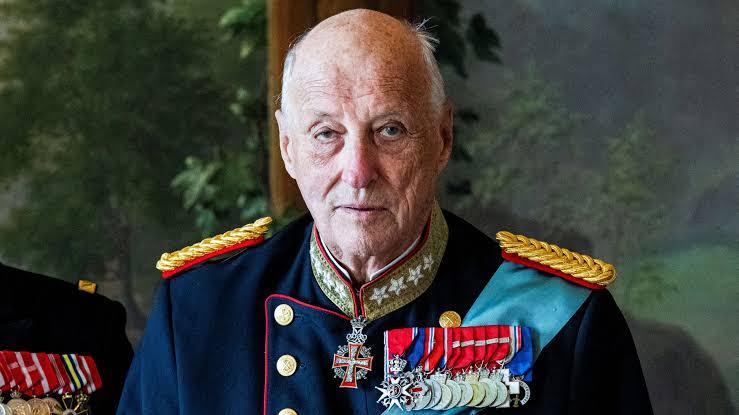
The monarch, who had occupied the throne since 1991 and stood as Europe’s oldest serving head of state, succumbed after a period of declining health that culminated in a hospital stay of nearly two weeks. Treated initially for a rare blood disorder that left him fatigued and short of breath, he later developed a serious infection that proved insurmountable despite intensive care at Oslo University Hospital. Family members, including Queen Sonja and Crown Prince Haakon, had remained close throughout the final days, cancelling public duties to stay at his bedside as the nation held its collective breath.
The king’s long tenure was marked by a quiet steadfastness that resonated deeply with the people. Ascending the throne following the death of his father, he navigated the modern constitutional role with a personal touch that blended tradition and approachability. Public appearances in recent years had grown fewer as age and health concerns mounted, yet he consistently declined any suggestion of stepping aside, viewing the oath he took decades earlier as a lifelong commitment. Citizens responded to news of his worsening condition by gathering outside the royal palace, laying flowers and standing in silent reflection, a spontaneous outpouring that underscored the affection he had earned across generations.
Throughout his reign the monarch faced personal and public challenges with characteristic reserve. Earlier medical interventions, including a pacemaker, had already signalled the physical toll of advancing years, yet he continued to embody continuity for a nation that values stability. Crown Prince Haakon, who had already assumed the role of regent during the hospitalisation, now prepares to succeed him, ensuring the seamless transfer of ceremonial and constitutional responsibilities. The transition arrives at a moment when the royal household has already weathered other family health concerns, making the present loss feel especially heavy for those closest to the throne.
Ordinary citizens expressed a mixture of grief and gratitude in the hours after the announcement. Many recalled the king’s visible presence at national milestones and his understated support for the country’s democratic institutions. The sombre atmosphere that settled over the capital and other cities reflected not only the end of a long life but the closing of an era defined by one man’s steady service. Officials moved quickly to organise the formal observances that will follow, while the public continued to mark the moment in their own quiet ways, from floral tributes to shared memories of a figure who had simply always been there.
As the country begins the process of mourning and transition, the memory of King Harald’s decades of quiet dedication offers a point of unity. His successor inherits both the institutional framework and the public goodwill cultivated over more than three decades. In the days ahead the focus will shift from the hospital corridors to the rituals of farewell and the first steps of a new reign, yet the sense of continuity that defined the late king’s approach is likely to remain a guiding presence for those who follow.