
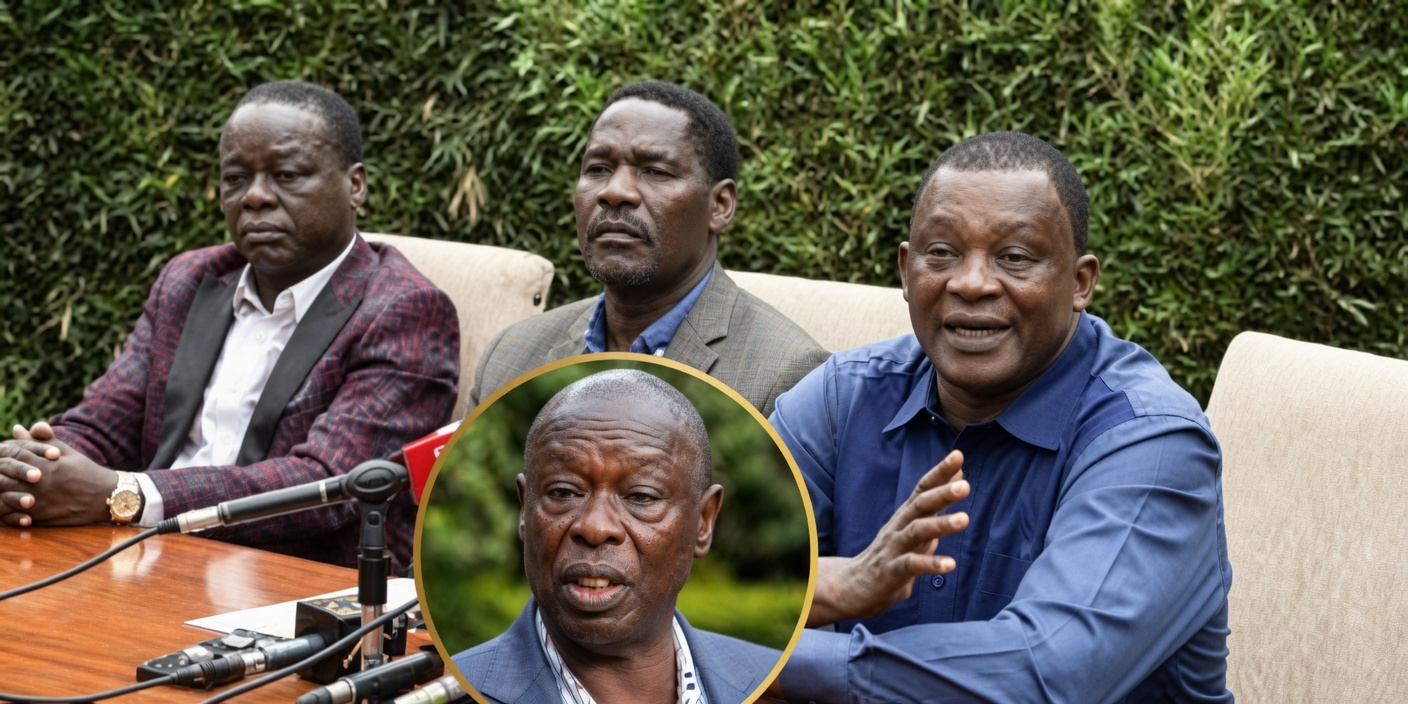
They accused him of trying to push smaller affiliated groups to dissolve and merge into his recently formed outfit, arguing that no individual holds exclusive authority to represent the entire area. The leaders stressed that longstanding parties predated his new vehicle and saw no reason to abandon their identities under pressure.
Democratic Party figure Justin Muturi voiced sharp frustration, asking why Gachagua felt entitled to demand dissolution of existing groups while speaking in their absence. He noted that these parties had operated for years before the new one appeared and questioned what sudden justification existed for such a forced consolidation. Party of National Unity head Peter Munya reinforced the rejection, stating clearly that no endorsement or consensus had ever granted Gachagua the right to speak for all political formations linked to the region.
Devolution Empowerment Party leader Lenny Kivuti defended the decision to raise concerns in public rather than confine discussions to private rooms. He argued that members of the broader opposition alliance retained every right to address reorganization, mutual respect, and strategic direction openly instead of remaining silent until closed meetings occurred. These public statements highlighted deepening rifts precisely when efforts to unify against the ruling side were intensifying.
At the same time, Wiper Party leader Kalonzo Musyoka pressed ahead with outreach after receiving formal authority from the Azimio la Umoja structures to gather like-minded groups. He hosted talks with Gachagua and DAP-the country leader Eugene Wamalwa at his Karen base, describing the session as a continuation of earlier work aimed at accelerating a fresh coalition. Musyoka emphasized that citizens across the country were waiting for a coherent alternative and that delays could not be afforded ahead of the next general election.
Wamalwa echoed the focus on constructing a credible united front capable of presenting voters with genuine alternative leadership options. Yet the contrasting positions revealed the practical difficulties of balancing regional interests, personal ambitions, and collective strategy, especially in a vote-rich zone that remains central to any successful challenge against the current administration’s alliance. The episode underscored how fragile opposition unity remains even as consultations continue.