
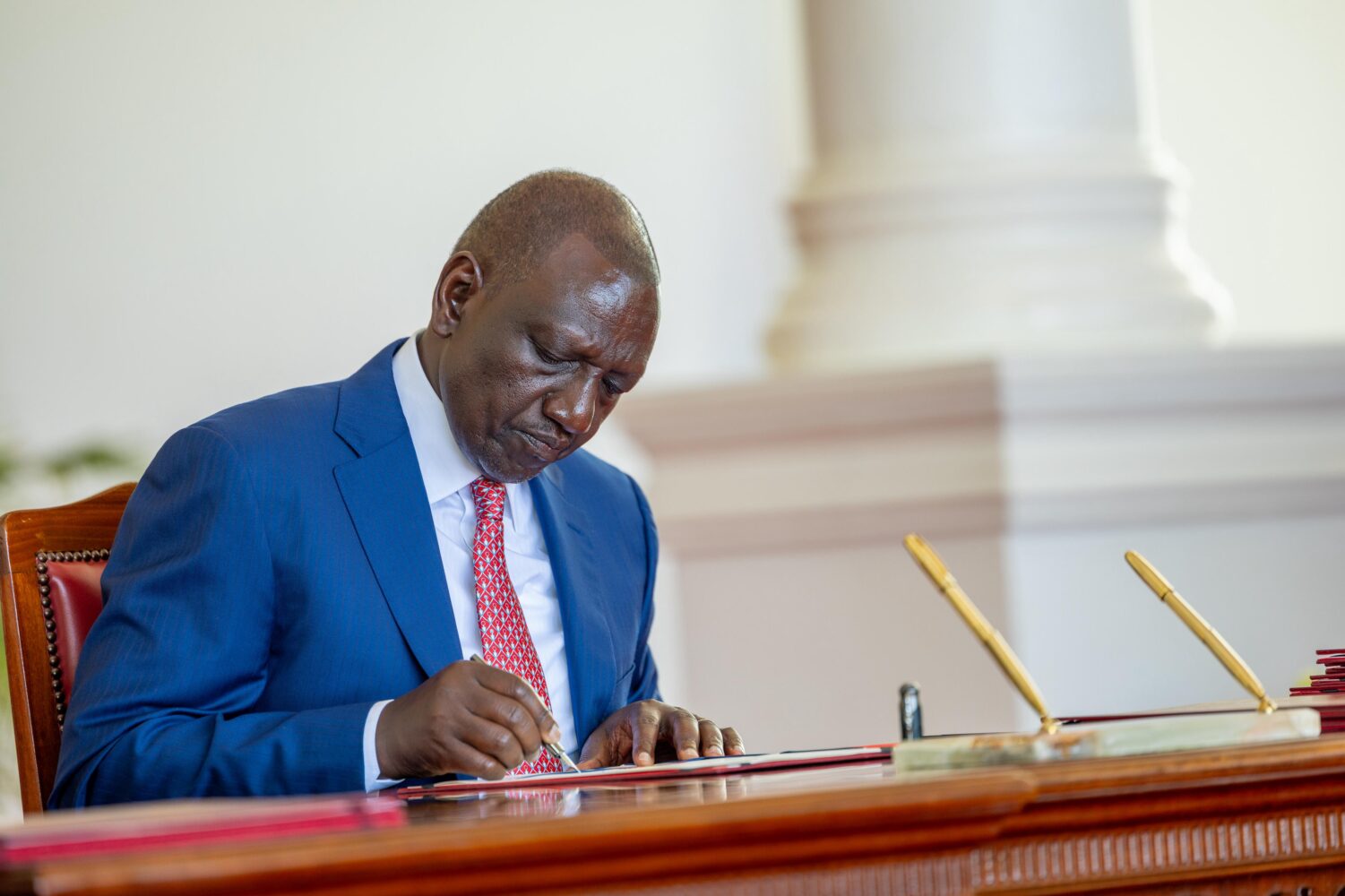
Dr Duncan Oburu Ojwang will serve a six-year term as IPOA chairperson, while Flora Nduku Mutua joins the Public Service Commission for the same period. Antonina Lentoijoni and Wilson Sossion have been named members of the Teachers Service Commission, also for six years. The appointments were formalised after parliamentary vetting and approval in late August.
Ojwang arrives at the policing oversight body with a strong background in law, human rights and governance. He previously served as dean of the law school at Africa Nazarene University and taught for more than a decade at the University of Nairobi, specialising in constitutional law, environmental law and development issues. Beyond the classroom he has worked as an African Union election observer and contributed technical support to the bipartisan National Dialogue Committee process. He also took part in mediation efforts aimed at supporting democratic transition in South Sudan, experience that supporters say equips him to balance independence with constructive engagement.
Sossion’s move to the teachers’ employer marks a notable shift from union leadership to the commission that manages the profession. A former secretary-general of the main teachers’ union, he rose through branch and national ranks before resigning in 2021 and later serving briefly in a senior administrative role. He began his career as a science teacher and holds advanced degrees in educational leadership. During earlier parliamentary scrutiny he argued that his union background would improve dialogue between the commission and classroom practitioners. Lentoijoni, by contrast, brings deep institutional knowledge after more than seventeen years inside the commission, most recently as director of staffing responsible for recruitment, deployment and the management of teacher data systems.
The package of appointments comes at a moment when public confidence in policing accountability, public-service delivery and the management of the teaching workforce remains under close scrutiny. IPOA’s mandate to investigate and oversee police conduct places its new chair at the centre of efforts to strengthen civilian oversight. At the same time the Teachers Service Commission continues to navigate recruitment pressures, promotion backlogs and the demands of an expanding junior secondary system. The inclusion of both a veteran unionist and a long-serving administrator on the same board is being watched for signs of whether internal and external perspectives can be balanced effectively.
As the four appointees settle into their roles, attention will turn to whether the new leadership configurations can deliver measurable improvements in transparency, responsiveness and professional standards across the institutions they now serve. The decisions reflect an ongoing effort to refresh constitutional commissions while navigating the competing expectations of different stakeholders in the country’s public life.