
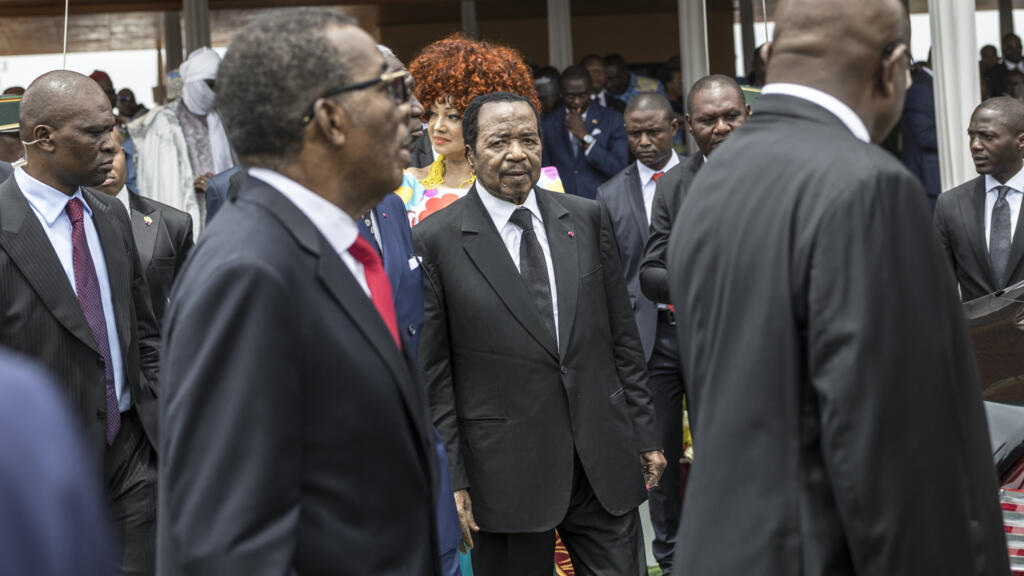
The 93-year-old, widely recognised as the world’s oldest sitting head of state, touched down at Yaounde’s Nsimalen International Airport on Thursday aboard a chartered flight from Geneva. His arrival brought an end to more than ten weeks of silence that had sparked intense public discussion about his wellbeing and ability to continue governing.
Biya had departed on the seventh of June, with officials describing the trip as nothing more than a short private visit to Europe. Accompanied by First Lady Chantal Biya, he landed in the late afternoon and immediately set off in a motorcade toward the Etoudi Unity Palace. Along the route, hundreds of supporters from the ruling Cameroon People’s Democratic Movement lined the streets, waving party colours and holding banners that praised their president. From a half-open vehicle window he offered a brief wave in acknowledgment of the warm reception.
The extended stay abroad had generated months of speculation despite repeated official assurances that the president would return shortly. Questions also intensified about the future of political leadership in a system where authority remains tightly concentrated in the hands of the presidency. Opposition figures had even urged the Constitutional Council to consider whether temporary arrangements should be made while Biya remained outside the country, yet the body took no formal steps.
Under the national constitution, the absence of a vice president means the head of the Senate would step in if the presidency were ever declared vacant through death, resignation or permanent incapacity. Although the vice-presidential role was restored only last April, Biya has yet to name anyone to the position. Critics argue that this gap leaves the nation without a clear roadmap for transition should the elderly leader become unable to perform his duties.
The homecoming has temporarily quieted the most immediate concerns, yet it has also sharpened focus on the deeper structural issues surrounding succession. With power so firmly centred on one individual, many observers continue to wonder how the country would navigate a sudden change at the top. Biya’s return may have closed one chapter of uncertainty, but the larger conversation about Cameroon’s political future shows no sign of fading.