
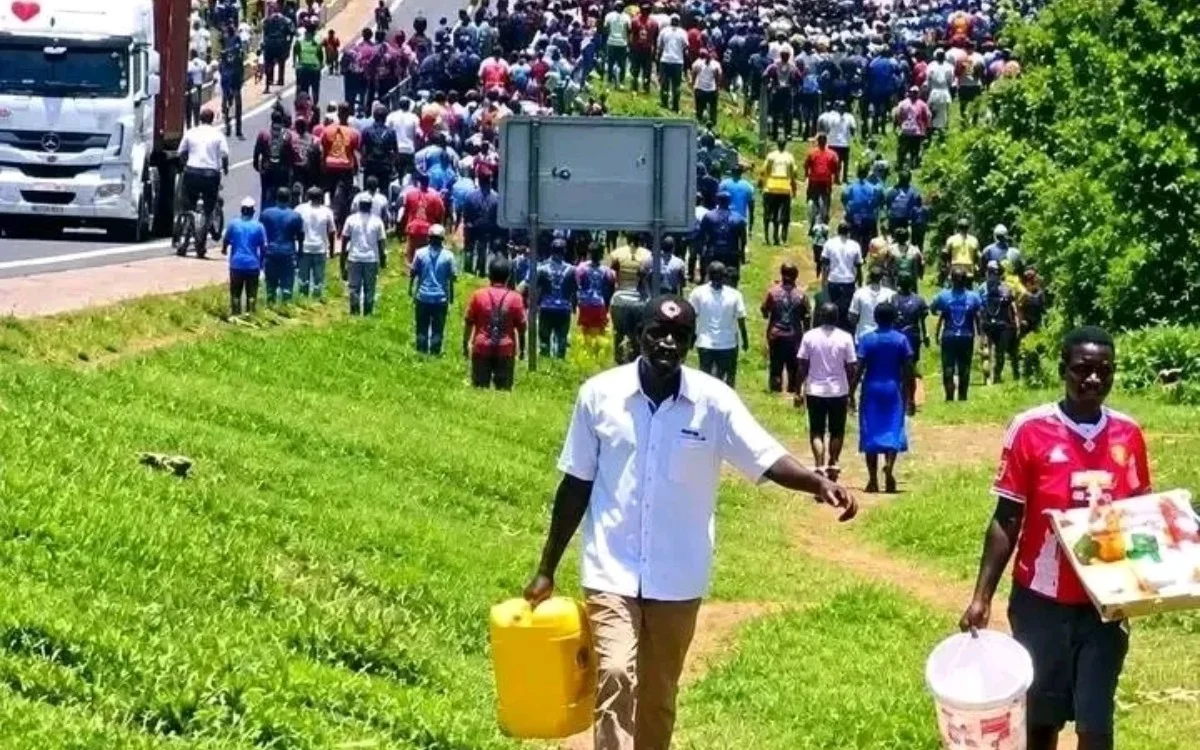
A tanker carrying fuel overturned along the Bungoma-Malaba Road, attracting residents who rushed to the scene with jerrycans to siphon fuel from the vehicle.
Images from the scene show men, women, and young boys gathered around the overturned tanker, despite visible “DANGER” warnings on the vehicle indicating that it was carrying highly flammable fuel.
The scenes have raised fresh concerns over the dangers members of the public expose themselves to when they approach overturned fuel tankers in search of spilt fuel.
Siphoning fuel from an overturned tanker is extremely dangerous because petrol vapour is highly flammable and can ignite when exposed to a spark, flame, or other ignition source.
The danger is not limited to the person handling the fuel. Vapour can spread beyond the immediate area, meaning a fire can engulf a large crowd within seconds.
The use of metal containers, vehicle batteries, electrical equipment, mobile phones, or other potential sources of sparks around spilled fuel can further increase the risk.
Previous tragedies in Kenya demonstrate how quickly such situations can turn fatal.
In January 2009, more than 100 people died at Sachangwan along the Nakuru-Eldoret Highway after a fuel tanker overturned and residents gathered to siphon petrol. Contemporary reports said some victims were carrying jerrycans of fuel when the fire broke out.
In Malanga, Siaya County, in July 2021, an overturned petrol tanker exploded as residents were siphoning fuel. Reports put the death toll at more than a dozen, while scores of others suffered burns.
Another painful reminder is the 1998 Sidindi tanker tragedy, also in western Kenya. A tanker overturned, and villagers rushed to collect fuel before it caught fire. According to a later account by Daily Nation, 39 people died, and scores were seriously injured. Survivors recalled suffering severe burns after joining the crowd at the scene.
More recently, the danger was demonstrated again in Turbo, Uasin Gishu County, where an overturned tanker on the Eldoret-Webuye highway attracted residents who attempted to siphon fuel. The tanker exploded, killing people and leaving others with severe burns. Hospitals treated numerous casualties, including patients requiring intensive care.
The incidents have repeatedly prompted authorities to warn members of the public against approaching fuel tanker crash scenes.
For anyone who encounters an overturned fuel tanker, the safest action is to keep a safe distance, avoid any attempt to collect the spilled fuel and allow police, firefighters and other emergency responders to secure the area.
The apparent value of a few litres of free fuel can never outweigh the risk of serious burns or death.
As the scenes along the Bungoma-Malaba Road demonstrate, an overturned fuel tanker is not an opportunity to collect fuel — it is an emergency scene that should be avoided