
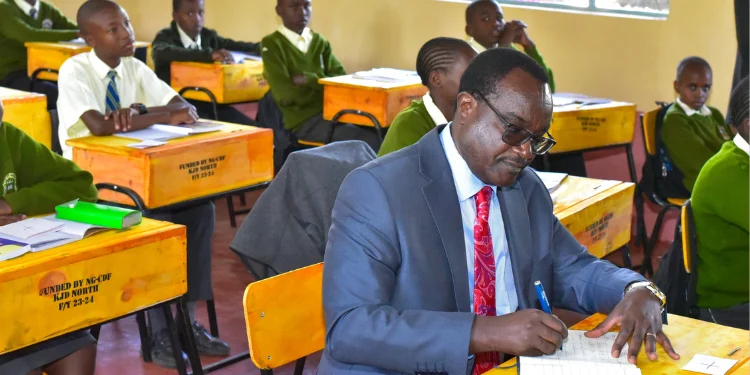
According to school heads, the money released so far covers only 72 percent of the expected yearly amount of Sh22,244 per learner, creating a shortfall of roughly Sh6,102 for each student. The timely arrival of the funds is expected to ease some immediate financial pressures as the final term of the academic year begins.
Willie Kuria, chairman of the Secondary School Heads Association of the country, welcomed the prompt release while highlighting the remaining gap. “We appreciate the government for releasing the capitation in good time; it will help schools to try and settle some of the debts. However, the capitation so far released is 72 per cent for the whole year. We hope that the balance will come soon,” he said. Earlier terms had brought Sh7,952 and Sh4,852 per learner respectively, bringing the cumulative figure to about Sh16,142 before the latest payment.
President William Ruto announced the disbursement on the eve of reopening, emphasising that funds were being released before the start of term to avoid disruptions. He dismissed claims of funding shortages and stressed that education remains a priority because it serves as an equaliser for children from different backgrounds. Education Cabinet Secretary Julius Ogamba confirmed that the Sh18.5 billion would support operations in pre-primary, primary, junior and senior schools, with allocations of Sh1.4 billion, Sh6.14 billion and Sh10.96 billion respectively across the main free education programmes.
The ministry has directed school heads to use the resources carefully for the benefit of learners and to avoid imposing any unauthorised charges. Officials noted that the government remains committed to providing free and compulsory basic education as required by the Constitution. At the same time, the persistent shortfall continues to leave many institutions managing debts and operational costs with incomplete funding.
As classes resume for the shortest term of the year, schools will rely on the newly released money to keep activities running while awaiting the balance. The situation underscores both the progress made in timely disbursements and the ongoing challenge of matching actual releases to the full annual commitments needed for smooth learning.