
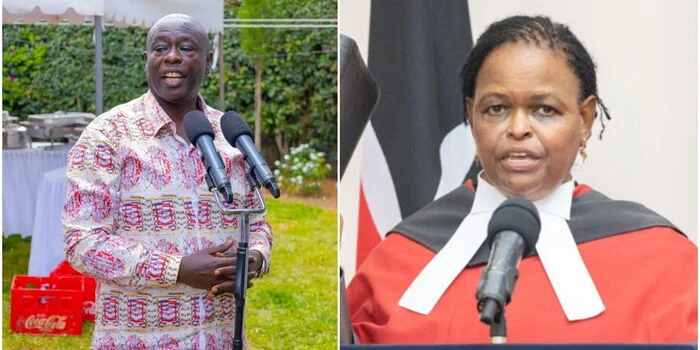
This decision came from a five-judge bench led by Chief Justice Martha Koome on Friday (January 30, 2026). The court rejected all the side applications (petitions) from both sides and said there would be no payment of legal costs.
In October 2024, Parliament impeached and removed Gachagua from office. He then challenged this in court. A three-judge bench at the High Court was set up to hear his case, but there were arguments about how that bench was chosen—especially because the Deputy Chief Justice picked the judges when the Chief Justice was away.
Gachagua asked the Supreme Court to:
-Stop the High Court cases for now. -Remove some documents from the court records. -Throw out the National Assembly's appeal. And other related requests, claiming bias or unfairness.
The National Assembly also asked the Supreme Court to throw out Gachagua's own cross-appeal (his counter-arguments).
What did the Supreme Court decide?
The court said no to everything. Key reasons: -It has no power to stop cases that are still in the High Court (only the Court of Appeal in some cases). -The main questions—like whether the bench was properly formed—are important and need a full hearing. -The documents Gachagua wanted removed are directly connected to the case and can't be ignored. -Gachagua's cross-appeal wasn't weak enough to dismiss quickly.
The court stressed that this ruling is only about court procedures and who can form benches—not about whether Gachagua's impeachment was right or wrong on its own merits. That bigger question is still being handled in the High Court.
This clears the road for the main appeal to go ahead fully in court. The fight over the legality of how the High Court bench was set up will now be heard properly.